The Maynards of Margate Part 1

1966 Part 2

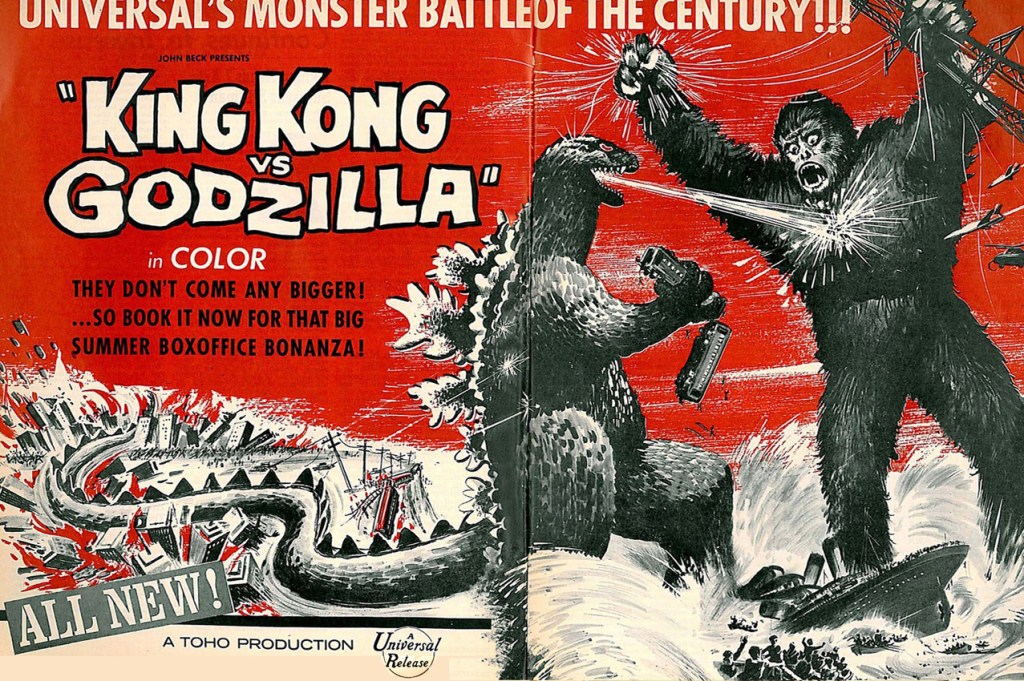
On Sunday 22nd May 1966, with another two years to go before I could legally do so, I finally got to pop my cherry, cinematically speaking that is, when I attended my first screening of an X certificate film. The Carlton cinema in Westgate put on double-bill horror programs at the weekend so me and a group of school friends went along to see “King Kong vs Godzilla” and the Hammer production of “Dracula” starring Christopher Lee in the title role. I’m really looking forward to the release of “Godzilla vs. Kong” later this year as I know it’s going to be a damned sight better than the version I saw back in 1966. It was so bad it made the poster look good. “Dracula” on the other hand was bloody brilliant and brilliantly bloody.

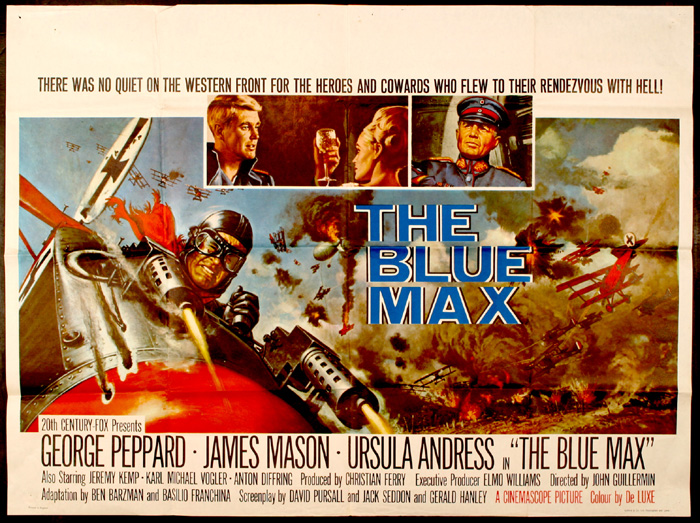
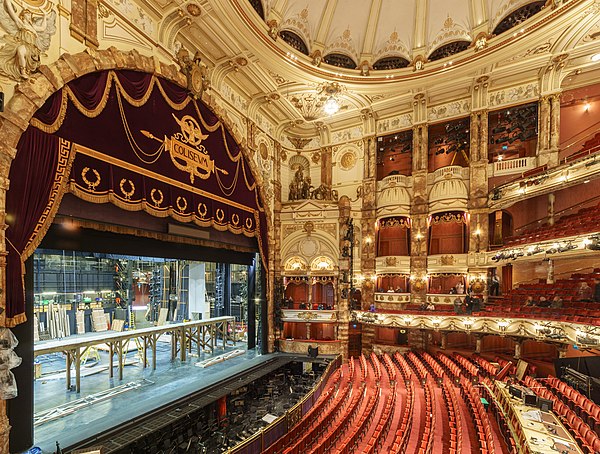
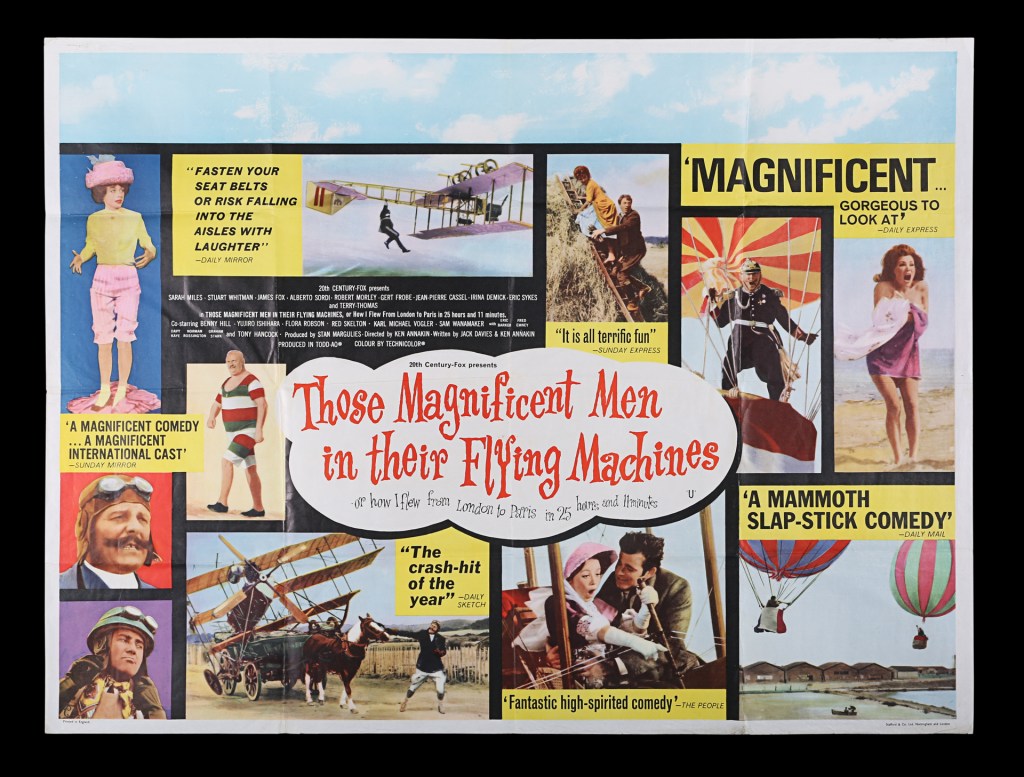
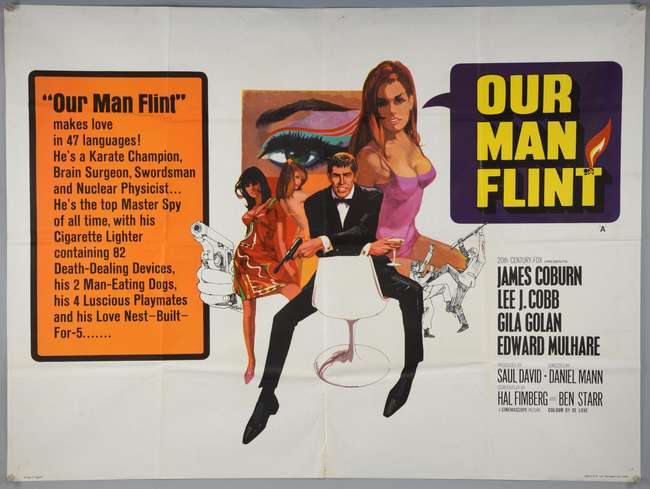
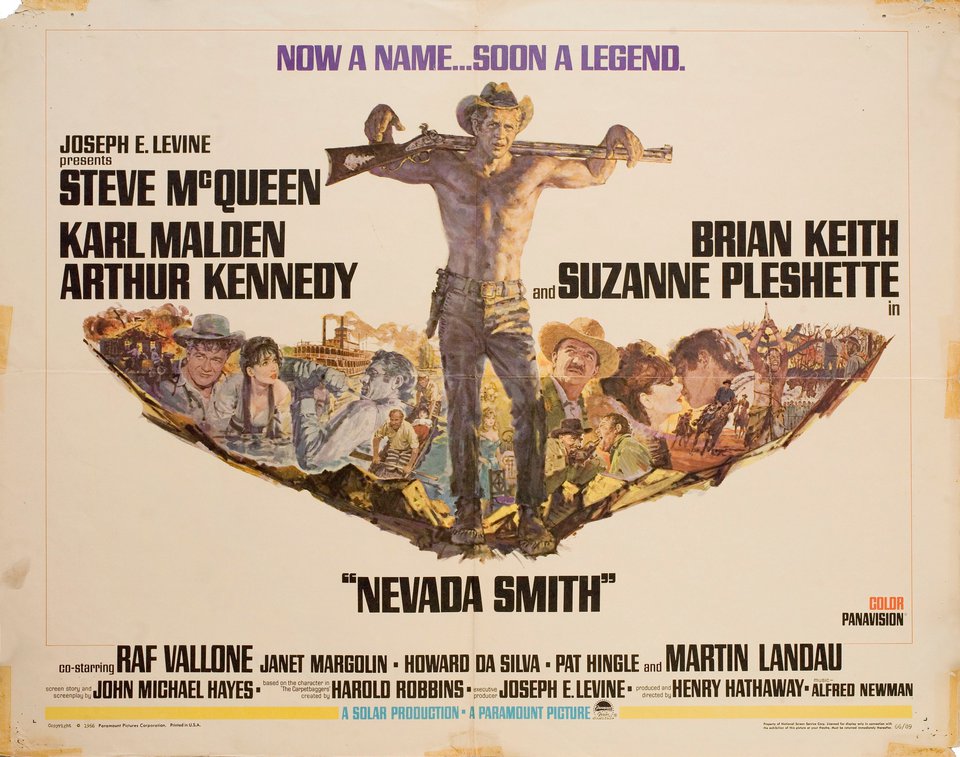
This was also the year I started taking  the occasional trip up to London with my friend Max (not his real name) to catch some of the big movies of the day before they went out on general release to the poor people in the sticks. Above are some of the films we caught in the big smoke. Me, Max and Terry saw “The Bible” at the London Coliseum Theatre. It was shown in full Cinerama format which was very impressive as I recall. 

As well as the films I saw in London I also visited the various cinemas at my disposal in Margate twenty-eight times throughout the year which I think was a record even for me. The posters above are some of the better movies I saw at Dreamland cinema in 1966.

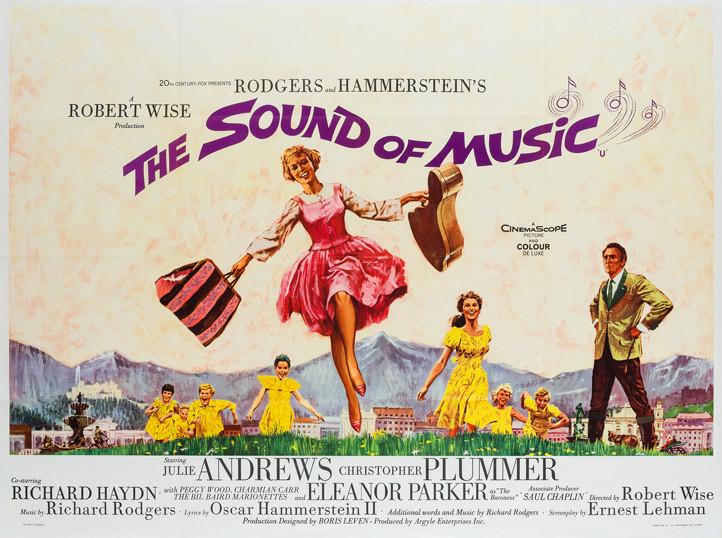
One film I refused to see at Dreamland was “The Sound of Music” which ran for alternate weeks during the summer from June to October. Although I still can’t bring myself to watch the movie whenever it’s shown on TV, I have seen the trailer about ten times which is why it kind of killed it for me. Not that I would have bothered anyway.  

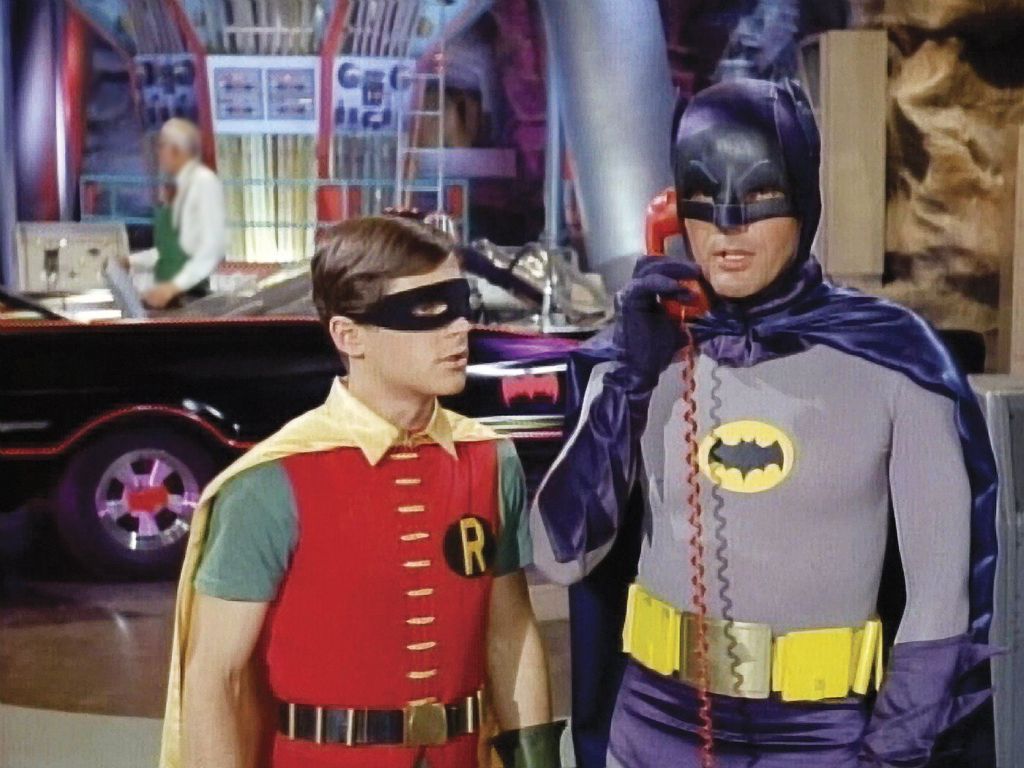
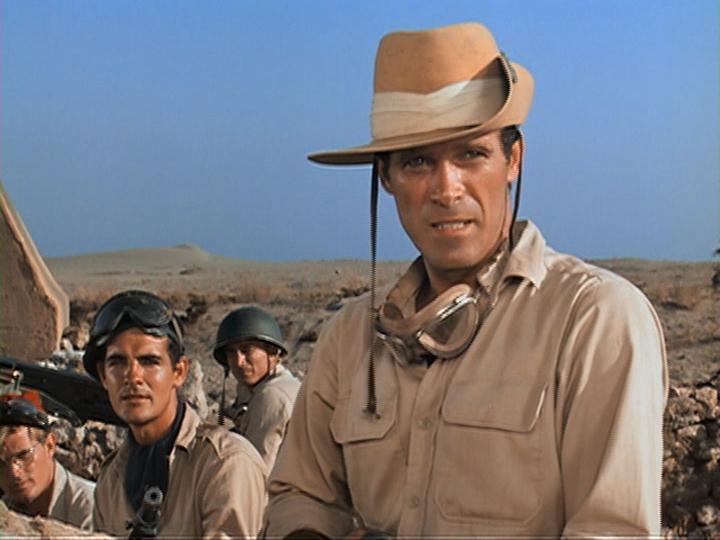
We were spoilt for choice in 1966 when it came to TV with the likes of “Batman” and “The Rat Patrol” debuting in the UK.  It was obvious “Batman” was a tongue-in-cheek spoof not to be taken seriously. Unfortunately for war film aficionado’s such as myself the real veterans of the WWII desert campaign took “The Rat Patrol” too seriously seeing as no American soldiers actually fought in that particular area of conflict. The end result was that the BBC pulled it after only six episodes.

Bastards.

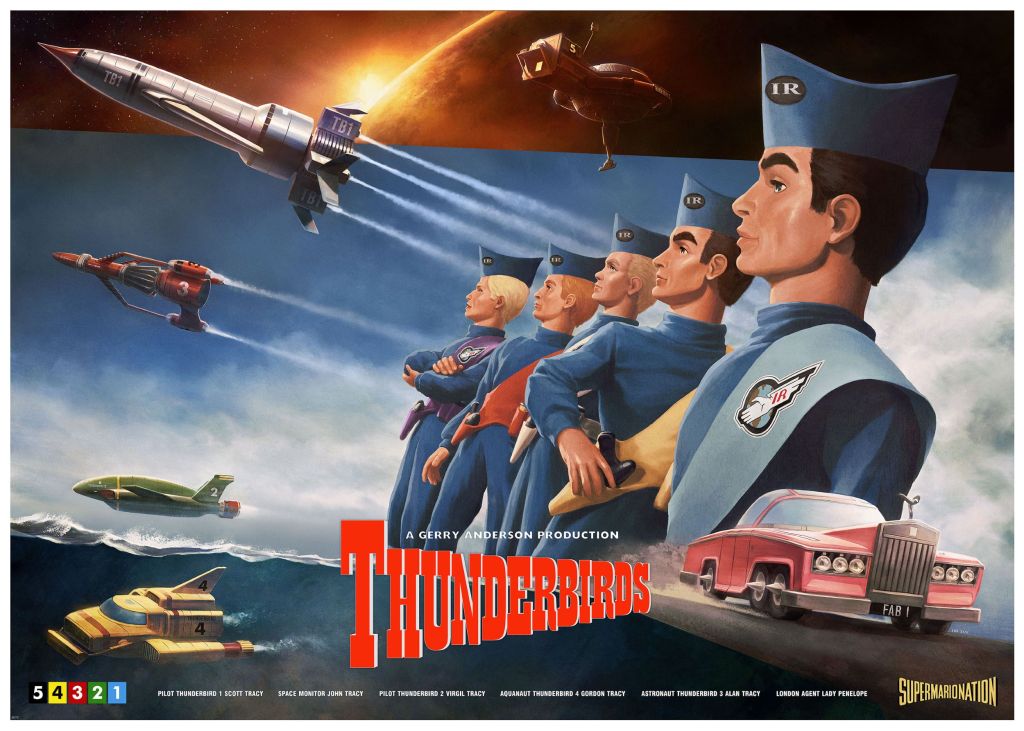
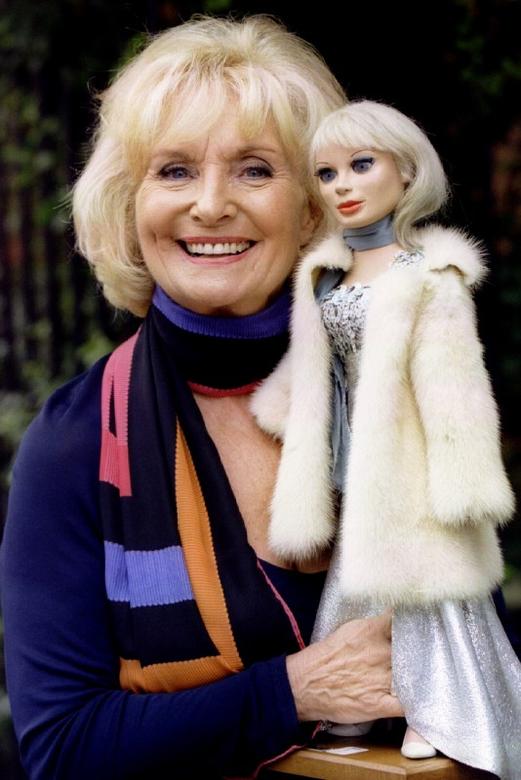
Finally, on the subject of television programs, ITV was the place to be on a Saturday night at 7:00pm as the latest one-hour episode of “Thunderbirds” unfolded on our little black and white 12-inch screens (I seem to remember a filthy joke at the time about a 12-inch Murphy which would take too long to explain here so I won’t bother). I’m still bemused by the fact that the nation sat transfixed by a puppet show on prime time TV at the weekend but we were simpler folk back then. I’m also bemused that many years later I met Sylvia Anderson who famously voiced Lady Penelope in “Thunderbirds”, but that’s for another time.

I want to thank all of the readers of my blog, both of them, for their kind comments regarding my attempt to get millions of people to buy my book “The Maynards of Margate”, now available on Amazon in both Kindle and paperback at a competitively reasonable price. I updated the book recently to take the story up to the year 1972 but I’m going to take some time out for a few weeks whilst I move house and try to get to know my new granddaughter better before resuming the blog.

See you in 1967 in a month or so.

The Maynards of Margate Part 1

1966 Part 1

I got my first job in 1966, taking on a paper round for twenty-one shillings a week on behalf of the local newspaper and Post Office shop in Westbrook. My route took me along the seafront where I was required to deliver to the dwellings you see on the right of the image above. One morning I happened to look up at the top window of one of those houses and stood transfixed by the sight of a naked man staring out to sea, his genitalia hanging out in all its glory for any passer-by to clock if they were so inclined. Deciding this was not right and proper I instantly put in a transfer request for a different route. Thankfully it was granted a few weeks later but unfortunately the damage was done. There are some things a callow youth of fourteen years old should not be exposed to whilst doing his paper round and a stranger’s family jewels is one of them. 

Now that I was earning a crust I was finally able to quench my desire for that which every teenager worth their salt craves – to buy my very own record player. The Dansette was all the rage at the time so after hiding as much of my paper round money as I could from my dad who was always on the lookout for a permanent loan, I managed to scrape enough together to purchase a player that looked very much like the model in the image above.

The very first record I bought and played on the Dansette was “From Me To You” by the Beatles. This is the actual original vinyl single I purchased from a second-hand record shop located in Duke Street down by Margate Harbour. As my family will no doubt attest I have difficulty shedding the detritus of life one gathers over the years or, to put it another way, I have a bit of a hoarding habit. Thankfully I am able to justify this to my therapist on account of being able to use images in my blog of the numerous pieces of ephemera (Latin for crap) I’ve collected since my early teens.

Towards the end of the year I bought my very first long-playing vinyl album, “Best of the Beach Boys Vol. 1”. This is not my original copy, which I swapped with someone for “Led Zeppelin IV” in 1971 in a desperate attempt to gain some kind of street cred. The record  in the photograph you see above is a replacement I purchased a few years back. If I was a real nerd I’d tell you that this album is slightly different from the one I bought in 1966. It has the original version of “Help Me Rhonda” from the “Beach Boys Today” album as opposed to the one the group put out as a single whilst “Barbara Ann” is the full version from the “Beach Boys Party” album, and not the shorter version released as a single, but as I’m not a nerd I’ll keep that information to myself.

As I write in the book I got lucky in my third academic year at Hartsdown when my form teacher turned out to be nowhere near as mentally unbalanced as the one I’d been lumbered with for the previous two years. The report above with a number of A and B grades illustrate how much more confident I was becoming at school. Also, I was only absent for ten days that term which has got be some kind of a record. Unfortunately, this was about as good as it got so savour it while you can.

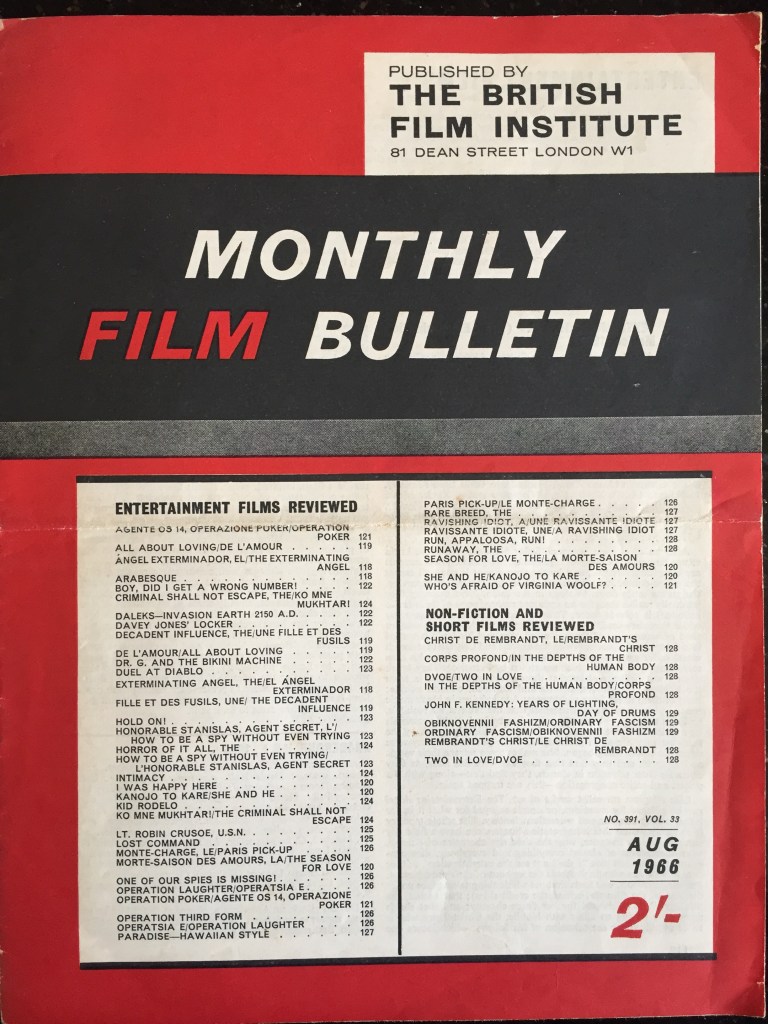
In September of 1966 I started my fourth academic year at Hartsdown and, as luck would have it, I got another pleasant form teacher, Mr. Shaw (not his real name). He not only encouraged me in my love for horror and sci-fi by introducing me to the books of Ray Bradbury, John Wyndham and Isaac Asimov, he also acknowledged my passion for cinema by giving me this very booklet you see in the image above. I’d never heard of the British Film Institute up to that point so it was good to know my obsession with film wasn’t actually a mental affliction of some kind.

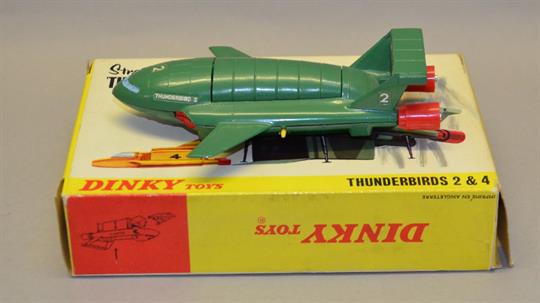
No James Bond film this year so I had to make do with another annual for Christmas instead. I don’t know at what age you’re supposed to start leaving your interest in toys behind you and replace it with a healthy enthusiasm for pornography, but I guess I hadn’t reached that point yet seeing as I asked Santa for a combined Dinky Thunderbird 2 and 4, as opposed to a subscription for “Bound and Gagged”. And no, this is not the original toy I found at the bottom of my bed on Christmas Day morning. After all, you can’t keep everything, although I tried as hard as I could.

See you next week for 1966 Part 2 in which I list my favourite films of the swinging mid-1960s. Groovy.

The Maynards of Margate Part 1

1965 – Part 2

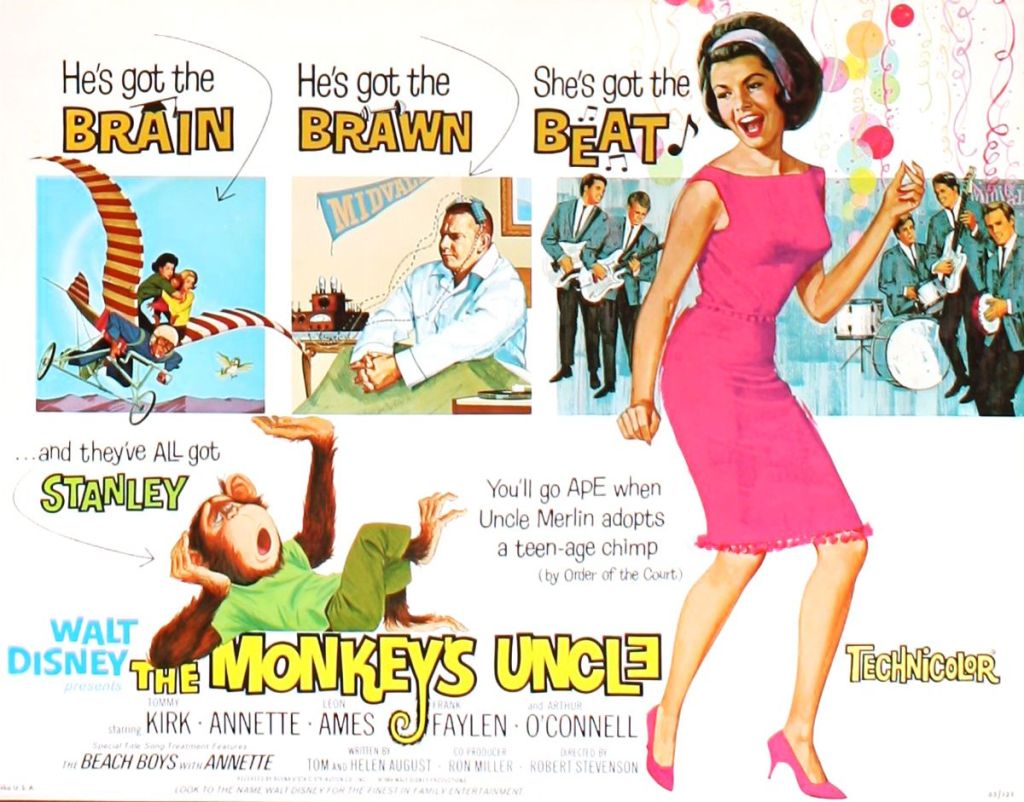
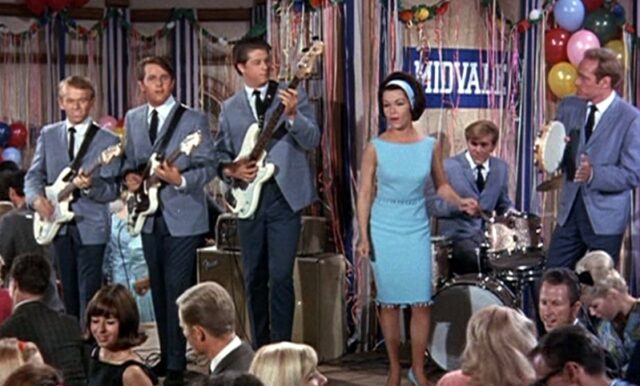
I heard the Beach Boys on the radio for the first time in the summer of 1964 when they had a hit in the UK with “I Get Around”. I was instantly smitten by their harmonies and good time California summer music despite the fact it had absolutely nothing in common with a kid growing up in Margate in the 1960s, which is probably why I perversely loved it. I didn’t even know what they looked up to this point so it was quite a surprise when I saw the Disney movie “The Monkey’s Uncle” and realised they were the backing band for Annette as she sang the theme tune over the credits. The film was shown on the lower half of a double bill along with another Disney offering, “Song of the South”, a film which is now officially cancelled due to its not-so-satisfactual attitude towards slavery.

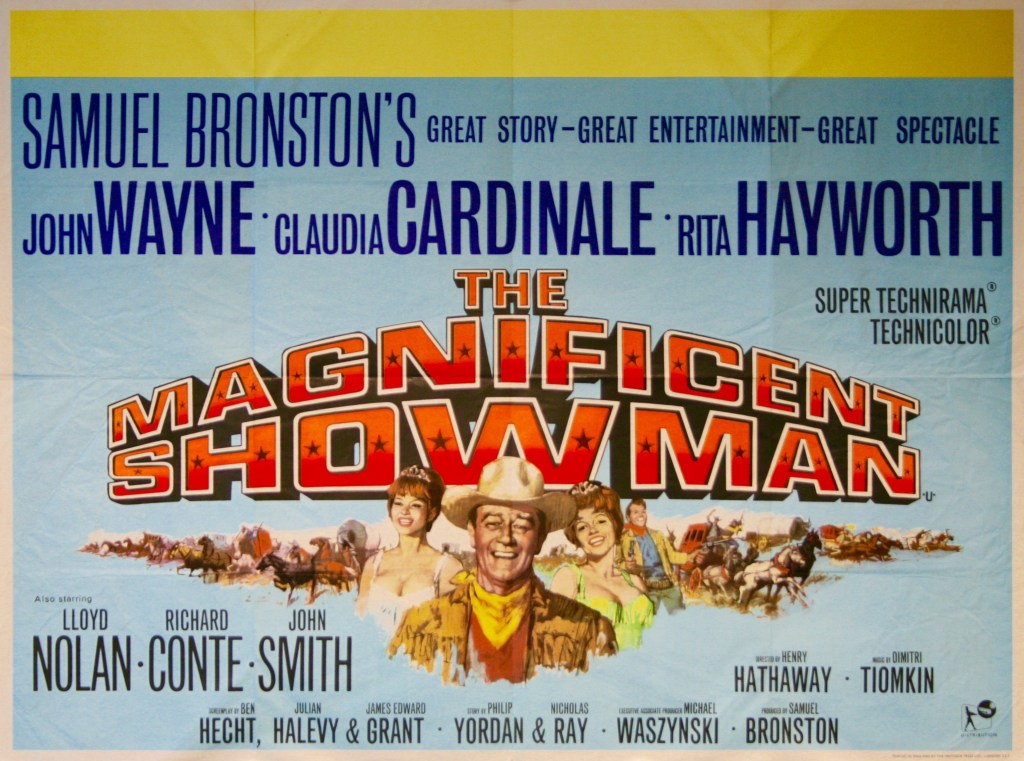
John Wayne was still churning out two to three films a year after losing his shirt on “The Alamo” which he both produced and directed back in 1960. “The Magnificent Showman” aka “Circus World” wasn’t one of his best but compared to his turn as the Roman centurion in “The Greatest Story Ever Told”, also released in 1965, it’s right up there in the Top Ten Sight & Sound list of the best films ever made.

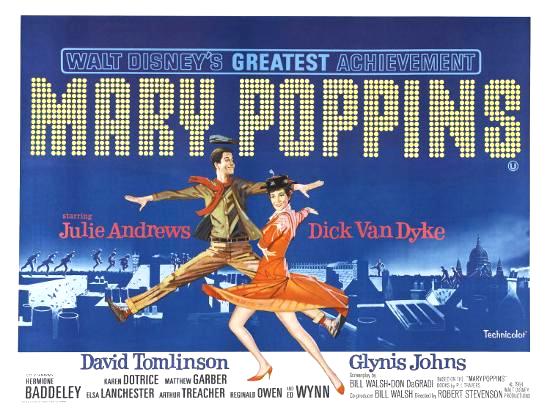
I’ve never been a fan of Hollywood musicals but I’ll make an exception when it comes to “Mary Poppins”. I was so impressed I even bought the soundtrack on vinyl a few years later. Actually I quite like “West Side Story” as well. And “Singin’ in the Rain” of course. You’d have to be missing a pulse not to like that one. But apart from – hang on, I quite like “On the Town” and “An American in Paris” as well. And “Top Hat”. But that’s it. Honest. Time to move on.

And this one. I liked “Help!” as well. Not as good as “A Hard Day’s Night” but back then we just couldn’t get enough of those zany madcap fab gear mop top Liverpudlian beat combo guys.

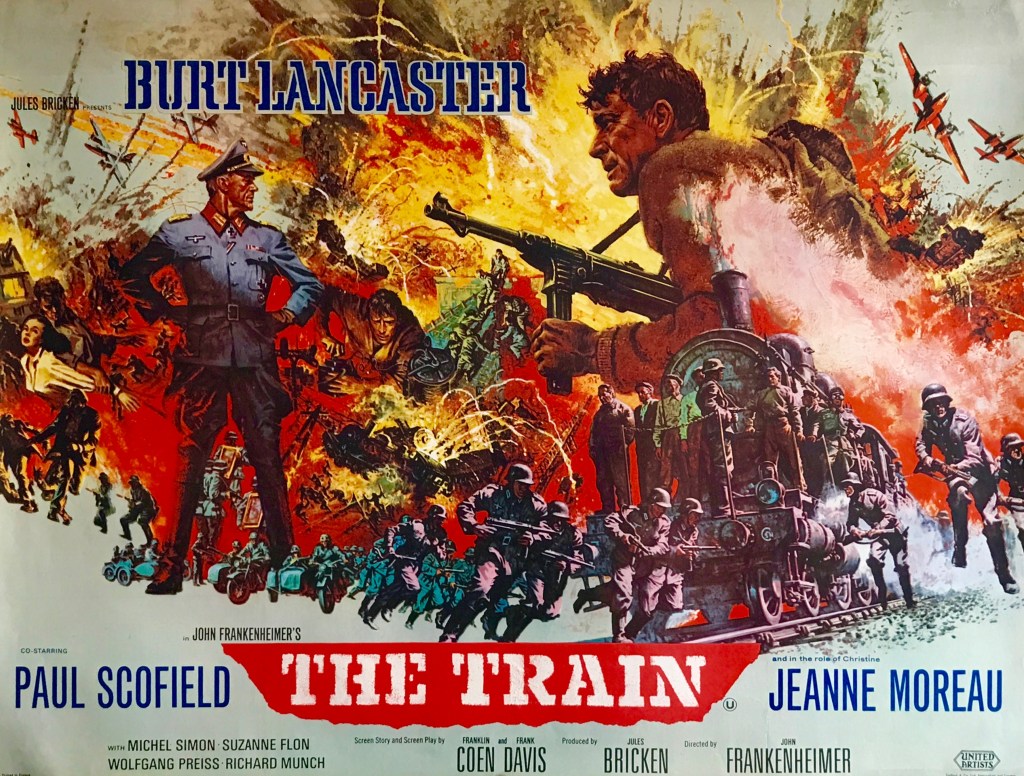
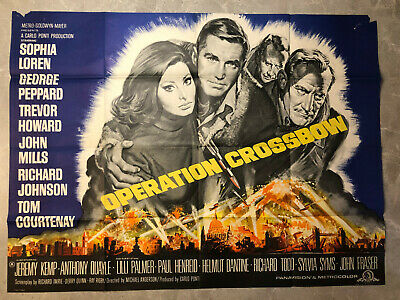
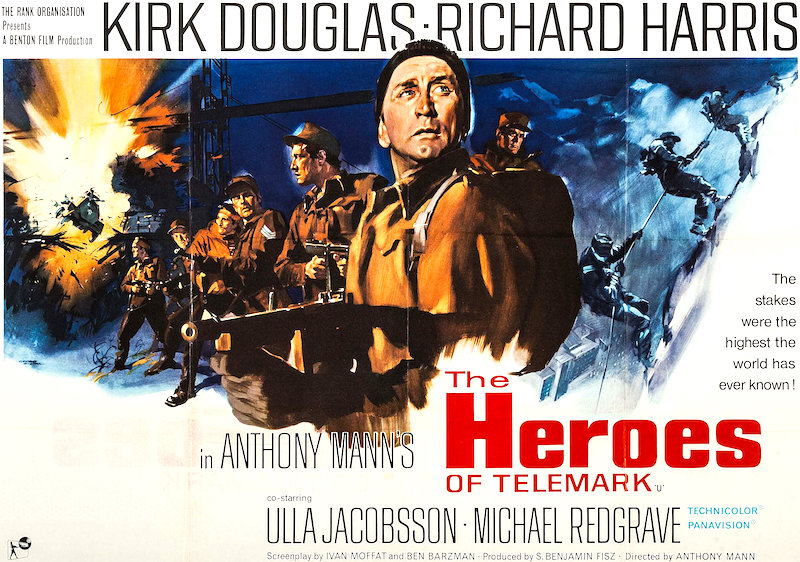
It appears we still couldn’t get enough of WW II movies either, even if by now Hollywood owned the rights to the conflict and therefore insisted on inserting an American actor in the male lead role for every single war film they made. Check out the four posters above. I rest my case.

Another year, another James Bond film, “Thunderball” being released right at the end of December. To some fans this is where the series started to move away from Ian Fleming’s original concept of Bond as a sadistic killer licensed to murder on behalf of Her Majesty’s government and play it more for laughs instead. I couldn’t have cared less one way or the other. For some reason I was unable to articulate at the time, I just wanted to marry Luciana Palluzi. I guess it must have been the Italian in me. 

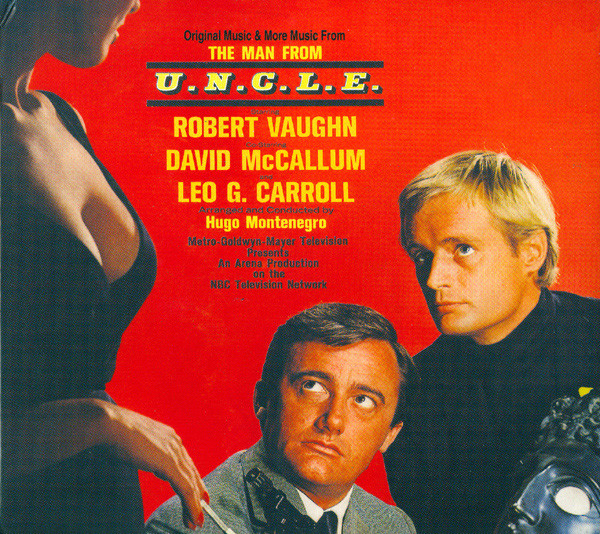
Staying with secret agents and all that, “The Man from U.N.C.L.E” proved to be very popular on TV over here although it seems the show dropped in the ratings in America when the producers decided to make it more tongue-in-cheek. I note that the U.N.C.L.E. ID card, one of which I purchased myself at the time, doesn’t have a Sabotage and Assassination department as I stated in the book. Probably just wishful thinking on my part.

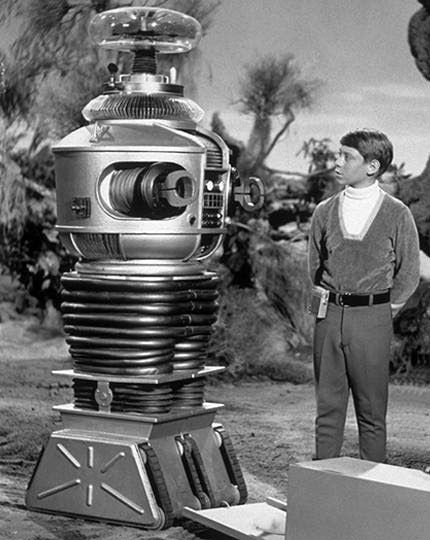
Produced by Irwin Allen and another show new to TV in 1965, “Lost in Space” started out as a genuinely thrilling sci-fi series but soon lost its own way in the mind of the audience once Dr. Zachary Scott, played by Jonathan Harris, took centre stage. The best character in the show was the robot. The guy inside it had more acting talent than the rest of the cast put together.

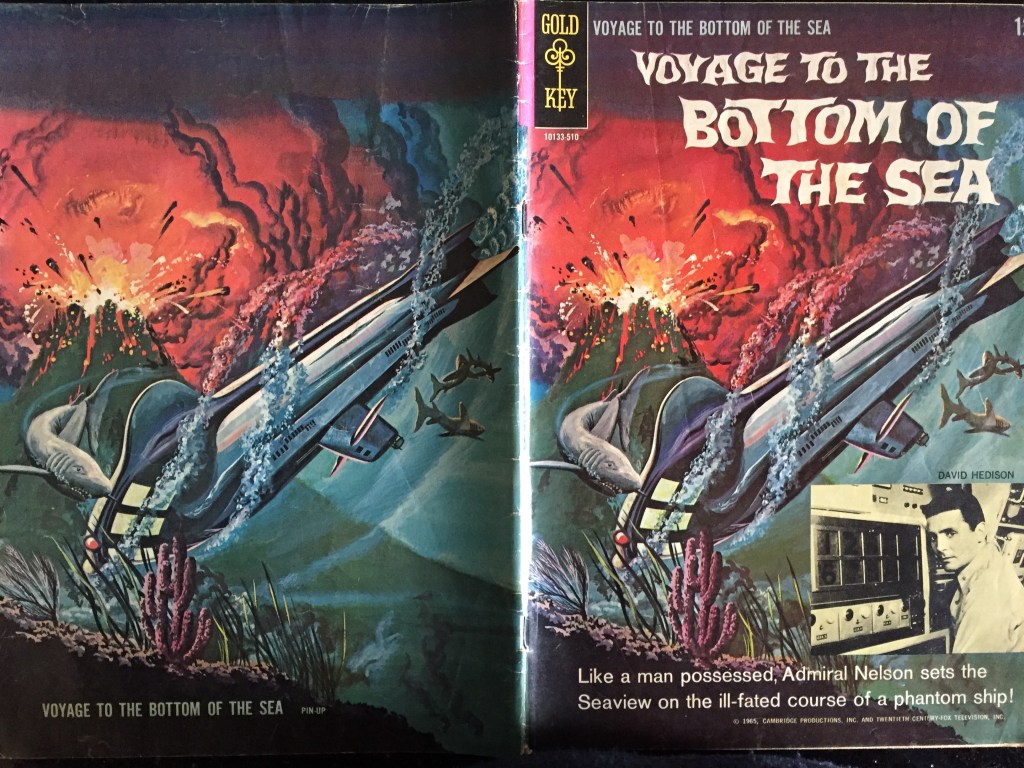
A quick mention for “Voyage to the Bottom of the Sea”, another TV series from Allen. I think I must have preferred this one to “Lost in Space” seeing as at the time I bought a few comics of the show like the one shown above, recently unearthed from the darkest corner of my loft. Great artwork too.

I was still sneaking over the road to my friend Jimmy’s house every Friday evening to catch the latest edition of “Ready Steady Go”. It was on one show in 1965 that I saw The Supremes for the first time and I immediately fell for Mary Wilson who can be seen in the middle of the image above. Sadly she passed away recently so our chance at a love supreme was never to be. Sorry, that’s the best I can do. It’s been a long week.

The Maynards of Margate Part 1

1965 – Part 1

Take a long hard look at this photograph. I count thirty-five pupils all lined up holding their school prizes – in case you’re interested I’m the midget in the front row fourth from the right wearing the light-coloured jumper – and apart from one or two there’s hardly a fat kid amongst us. I know I’ve just offended two minority groups for the price of one in that last sentence but let’s be honest here for a minute. Two slightly obese children out of a group of thirty-five equates to approximately just over 0.05% of the group as a whole. However, the trusty internet informs me that in this day and age a staggering 1 in 5 children aged 10 or over are currently classified as obese. That’s 20% now versus 0.05% when this picture was taken. No wonder we all look pleased with ourselves.

As an aside, the two objects of my romantic ardour, Jessica and Emily (not their real names), can also be seen second and third in the front row, positioning themselves as far away from me as they could possibly get without appearing rude.

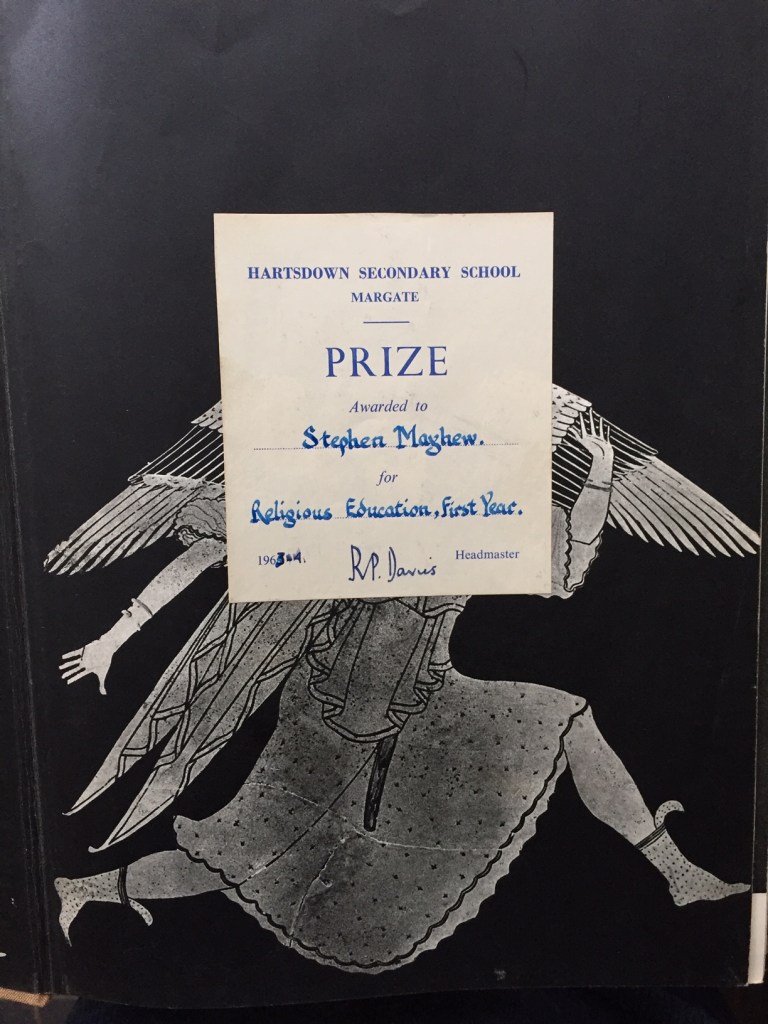
Here’s the book prize I chose which I received for convincing the RE teacher I was a committed God-botherer.

I enjoyed the ceremony so much I was moved to put my thoughts into words. I know, not exactly stylish reporting in the vein of Woodward and Bernstein but it’s a start.

This is a photograph taken during the summer of 65 which I labelled “Donkeys on Margate Beach”, but more accurately could be called “The Back of My Grandad’s Head”, seeing as that’s my mums dad in the black jacket. The only time I can remember him talking to me is when he told me a few years later to “get your bleedin’ aircut”. I’d hate to think what he’d say if he could see me now. What with the extended lockdown and no access to the nearest barber shop I’m starting to look like Ozzy Osbourne, and that’s on a good day.

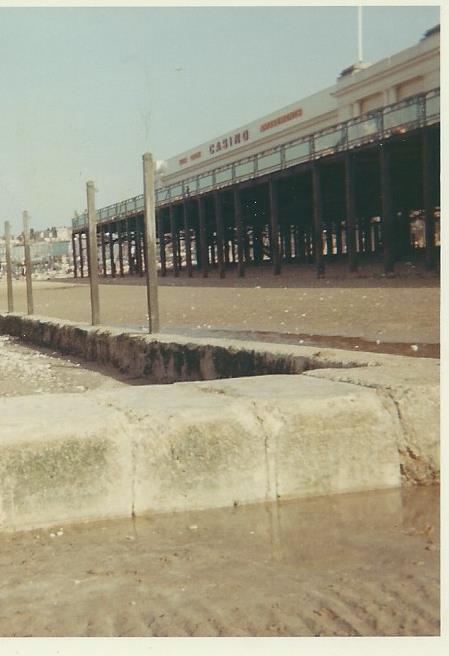
Here’s my mum posing on the Margate Riviera. It’s actually the swimming pool located just in front of where the Sun Deck used to be, as shown in the second image. The Sun Deck, which was the gathering place for the after-school Margate division of The Beach Boys (read the book), is alas no more. They should have left it standing in honour of the local population seeing as most of them were probably conceived under it late on a drunken Saturday night.

The photo above is cropped in order to avoid litigation from the other individuals stood next to me posing in the water on Ramsgate beach. The main reason I’m including it here is because it’s evidence that I really did try to hide the unsightly mole that lurked beneath my left nipple. The fact that nobody on the whole of the planet other than me gave a rat’s arse one way or the other isn’t the point. I knew it was there and that was good enough for me.

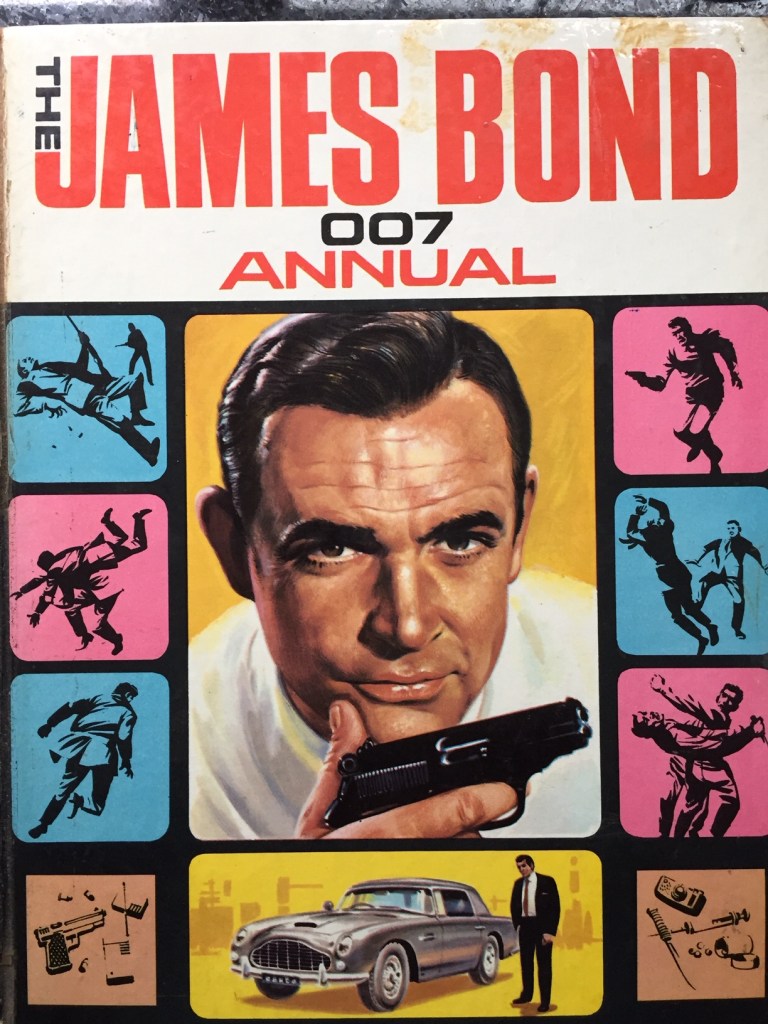
It was a James Bond Christmas for me and thousands of other kids in 1965. The first photo shows the Bond annual that Santa brought me which featured images from the first three Connery films and has remained faithfully by my side since then. Underneath is the best-selling Corgi Aston Martin DB5 as featured in “Goldfinger”. Unfortunately I don’t have the original toy as given to me that Christmas. If I did I’d have flogged it and would now be writing this blog from my beachfront mansion in Hawaii. We had lots of fun ejecting the bad guy from the passenger seat then spending the next thirty minutes looking for the bastard thing on our multi-coloured carpet before launching him to his death again. The fun we used to have back then. You wouldn’t believe.

Tune in again next week for my take on the best films of 1965, the ‘Disney classic’ “Song of the South” notwithstanding.

The Maynards of Margate Part 1

1964 – Part 2

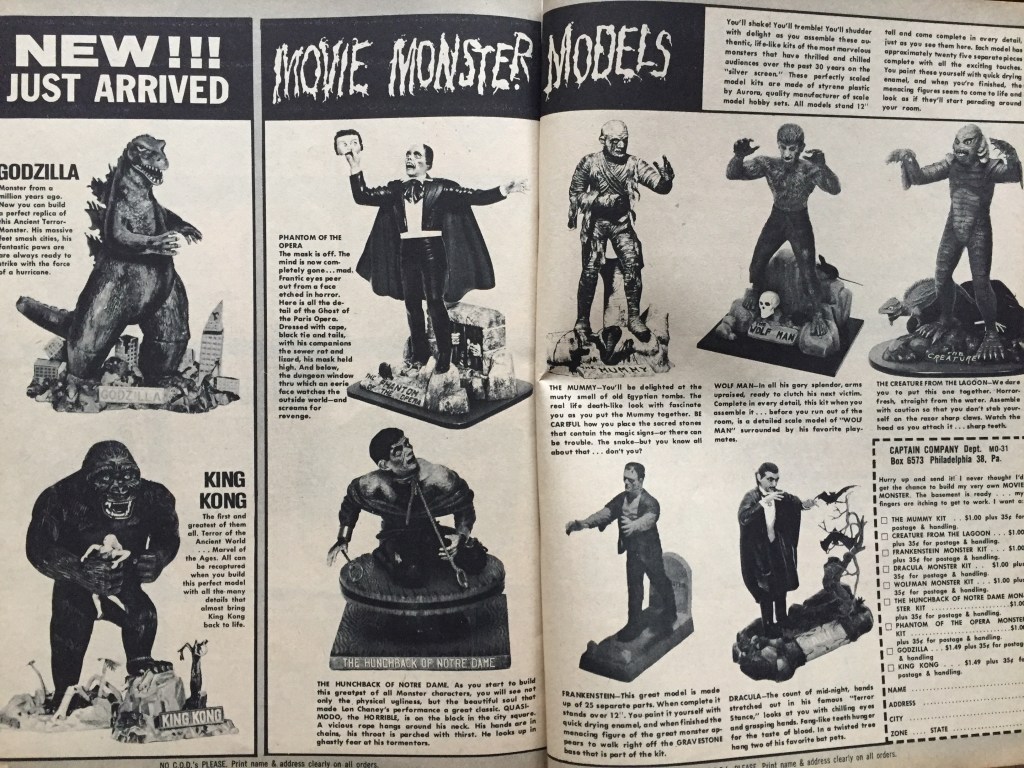
My love affair with all things relating to “Famous Monsters of Film Land” continued unabated, particularly when it came to the Aurora plastic kits on offer in the magazine. The kits eventually went on sale in the UK and I managed to get my hands on some of those shown in the photo above. My first purchase was the Creature from the Black Lagoon followed by the Hunchback of Notre Dame. Due to the onset of political correctness I’ve since found out he’s not a hunchback anymore – he’s a bellringer. Coincidentally, due to a casually discarded  Gauloise cigarette last year Notre Dame nearly wasn’t anymore either.

I must admit to my nostalgia getting the best of me recently to the point where I bought one of a series of reissued monster kits currently available on a famous non-tax paying internet platform. I aim to put together my Phantom of the Opera kit once the Covid virus is brought to heel and I can stop identifying with the poor screaming sod you see in lockdown behind him. Still, good to see the Phantom brought his own mask.

As for the films, here’s a couple of historical dramas that started off the year with a bang. “Zulu” recently came under criticism for promoting outdated colonial values not worthy of consideration in this day and age. I thought it was just a bloody good movie. I dunno. You can’t please anyone these days.

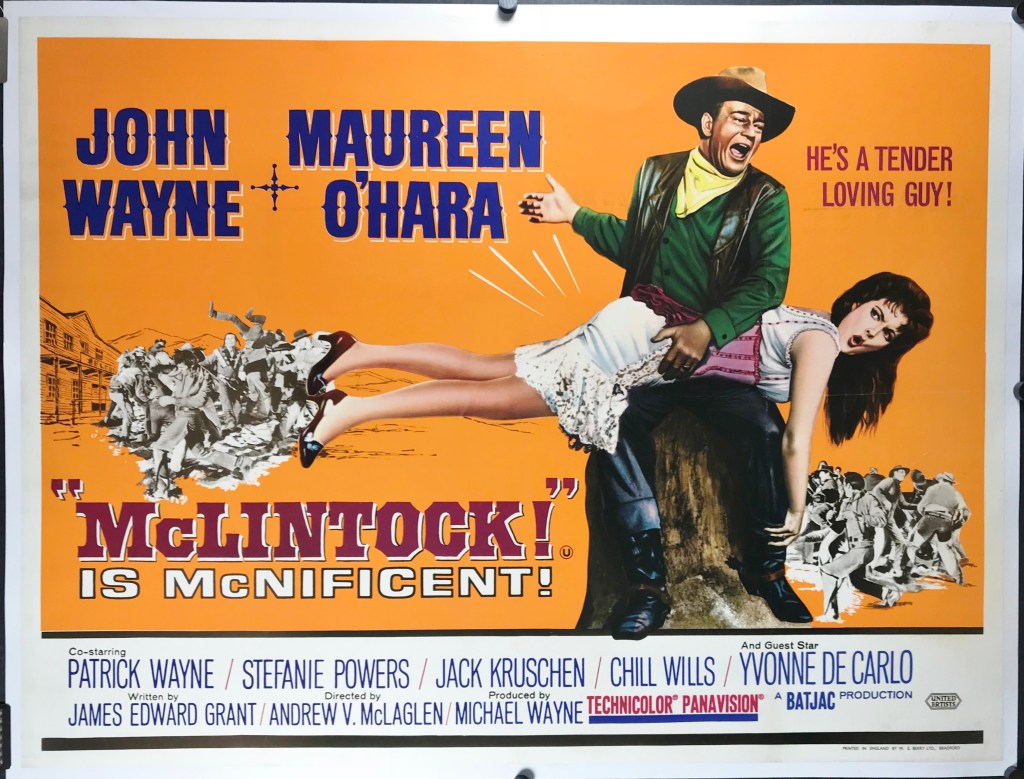
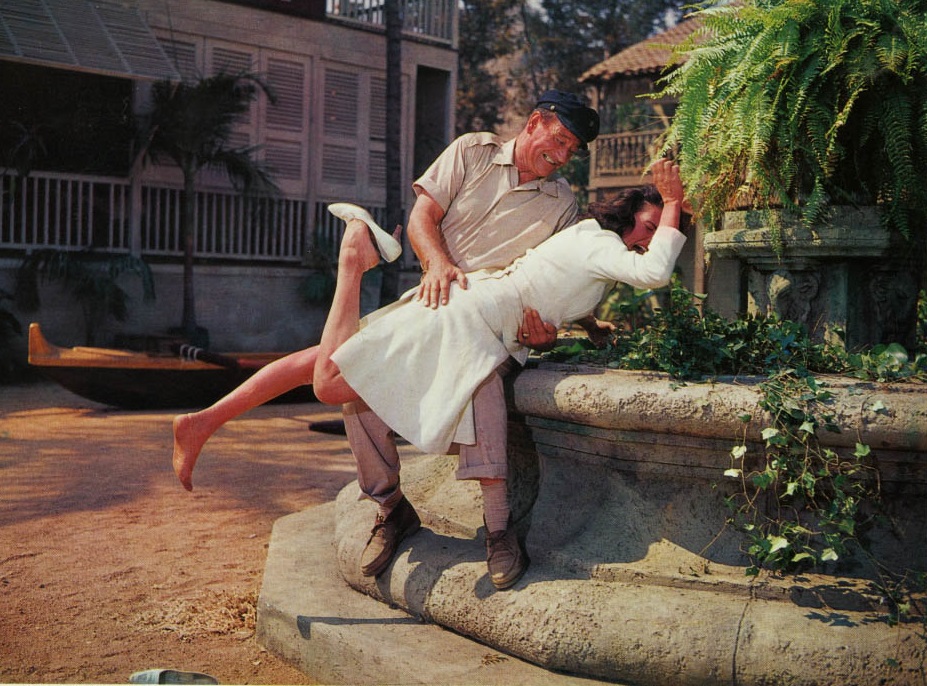
John Wayne has also received a lot of stick from the PC brigade for his unapologetic views that he aired in an interview back in 1972. However, it’s only recently that someone has pointed out to me that Wayne had a spanking fetish, as you can see from the “McLintock!” poster and an image from “Donovan’s Reef”, which I never actually got to see in the cinema. They certainly don’t make films this anymore – which is a good thing right?

Three of the four above had brilliant soundtracks but the one that didn’t, “First Men in the Moon”, has great Ray Harryhausen special effects to make up for it.

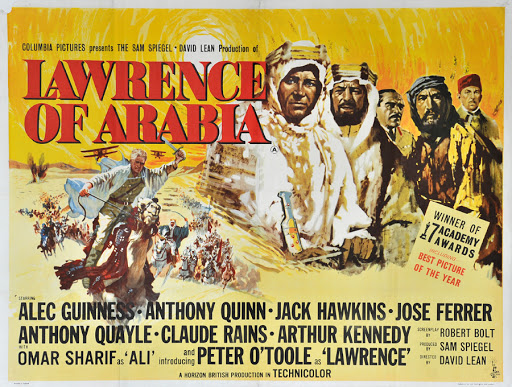
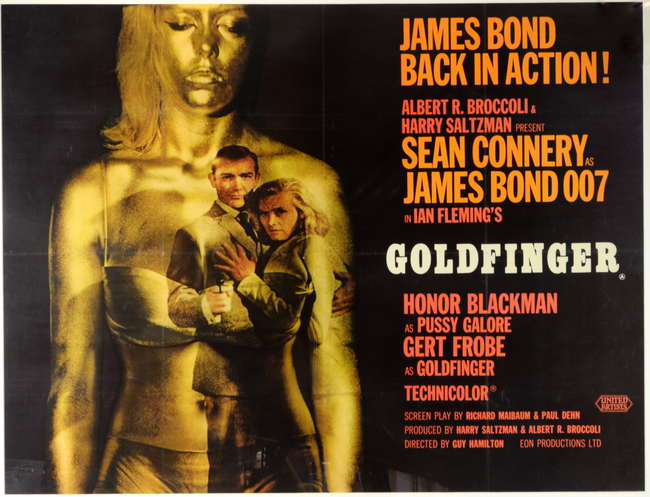
Looking back I’d have to say “Goldfinger” was the best film of 1964 for me, with “Lawrence of Arabia” a close second.  At the beginning of the series you’d get a new Bond movie every year and it was a real event to go and see the latest offering, “Goldfinger” still one of the best . Even if  the current pandemic hadn’t delayed the release of “No Time to Die’ there would still have been a five-year gap after the release of the last Bond film, “Spectre”. Maybe they should rename it “No Time to Wait”.

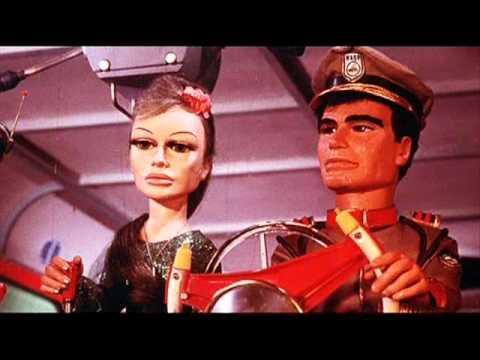
I think it’s about time I revealed my somewhat disturbing obsession – in my defence I was only twelve at the time – for the mute blonde puppet Marina in “Stingray”. The program was part of our family Sunday viewing a few years or so before me and my brother started trying to beat each other to death on a regular basis on the Sabbath. I think it was the song at the end of “Stingray”, a romantic ballad called “Aqua Marina”, that set something stirring in me to the point where I genuinely felt affection for what was basically a few pieces of wood cobbled together and hung from a couple of bits of string wrapped in a doll’s dress. What can I say? I’m only human – even if she wasn’t.

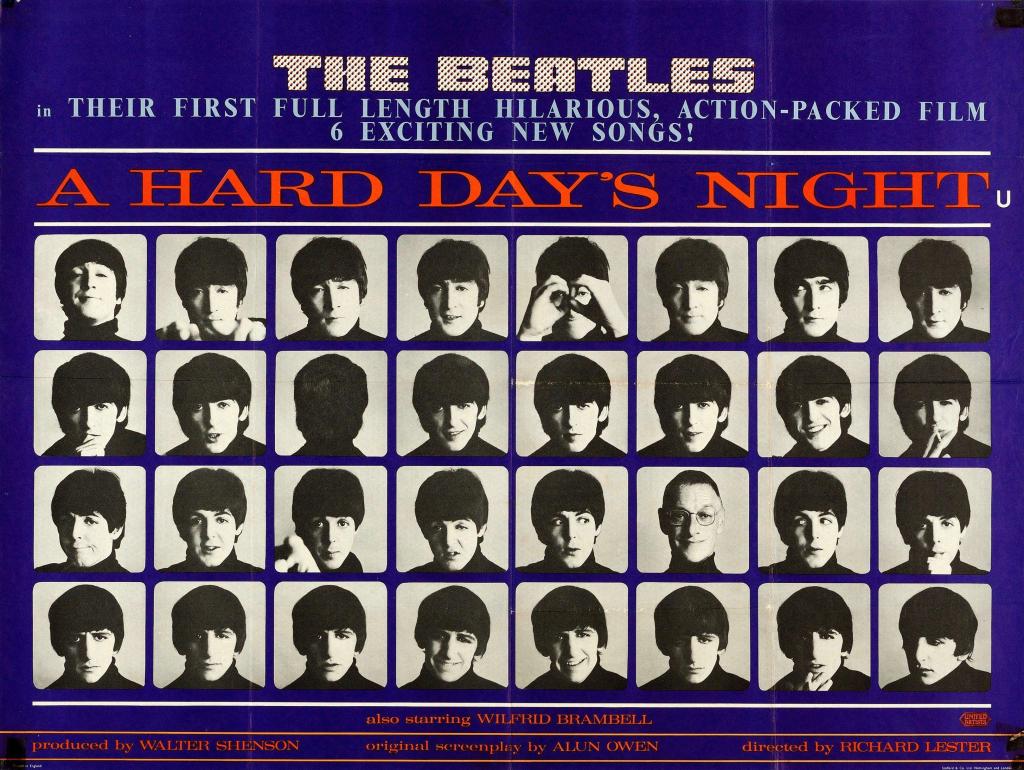
My school mate Max (not his real name) lived just a few streets away and I used to drop round to his house to do our homework together. He had an ancient gramophone player in the parlour and just two records, the single of “The House of the Rising Sun” by The Animals and the Beatles “Hard Day’s Night” album. He played the Beatles LP practically every time I was there to the point where I knew the track listing by order of the songs on both sides. Amazingly it didn’t kill the record for me and I still play it to this day. It’s difficult to convey to someone of a younger generation how much the world brightened up back in the 1960s once the Beatles arrived. They seemed to be everywhere, on the radio and TV, in the newspapers, on the newsreels in the cinema, they even played the Winter Gardens in Margate the year before, although I didn’t have the money to see them which is one of my biggest regrets.

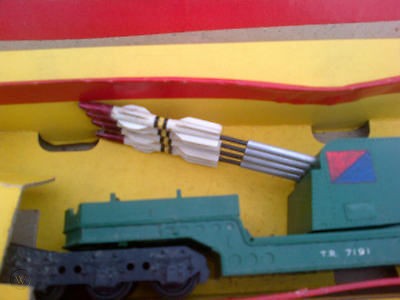
And finally, something I meant to include at the end of my blog posts for 1963, images of the train set my parents bought me for Christmas that year. I really liked this one because it appealed to the nihilist in me. Once the track was complete you uncoupled the red truck, the sides of which were held together on the inside via a set of metal clips. The train would then roll around the track until it was adjacent to the truck after which you would then illuminate it with the searchlight then blow it to bits with the rocket launcher. The truck could be rebuilt and the process repeated ad infinitum. Great fun for all the family, until one day it disappeared, ending up for sale in the window of Thanet Models at the lower end of Northdown Road. So, in case any of my family are reading this and want to know what I’d like for my birthday on March 1st….

John Ford Silent Films Thesis

Chapter 3 – The Auteur Theory and The ‘Fordian Sensibility’

In the numerous articles written on the auteur theory since the early 1950s, John Ford is often referenced as an example of the concept. In his seminal essay, ‘Notes on the Auteur Theory in 1962’, Andrew Sarris mentions Ford in the very first paragraph (Sarris, 1985, p.527). Peter Wollen gives equal consideration to both Ford and Howard Hawks in the chapter on the auteur theory from his book, Signs and Meaning in the Cinema(Wollen, 1987, pp.94-102). Seven of the essays published collectively in Theories of Authorship, edited by John Caughie, are listed under the heading ‘Dossier on John Ford’.  A casual student of film could therefore not be blamed for thinking that Ford is the quintessential auteur, virtually synonymous with the concept of authorship; but of course, the truth is more complex

For example, the role of a director as sole auteur is complicated by the contribution of the various scriptwriters with whom he or she may have worked. In Ford’s case, a large proportion of his output was written by three writers, George Hively, Dudley Nichols and Frank Nugent. Should they also be given credit as authors of, respectively, Bucking Broadway (1917), The Informer (1935), and The Searchers (1956)? On the other hand, a close examination of Ford’s films reveals a number of consistent thematic motifs present in most of the titles he directed from 1917 to 1966, irrespective of whoever wrote the script. This suggests that Ford’s interpretation of each individual screenplay transcended their differences, lending his films an overarching coherence and an identifiable ‘personal vision’, whatever the date, genre or collaborator. For example, The Hurricane (1937), with a scenario written by Dudley Nichols, is as much a consideration of the fracturing of the family unit as is The Searchers (1956), scripted by Frank Nugent.  That in itself does not necessarily mean that Ford was able to express his personal vision directly within each film, as a novelist might with a work of literature. Certain other factors must be taken into account, such as the constraints imposed by working within the Hollywood studio system. In using Ford as a case study on the question and nature of authorship, one must also consider, along with the aforementioned influences, the effect of other factors such as technological innovation and contemporary social attitudes. The following chapters engage in depth with each of these issues but, as even this brief discussion demonstrates, a range of external influences and surrounding frameworks – institutional, cultural, technological and biographical – must be taken into account before we can assess the various factors that constitute Ford’s authorship of his films. That is, though we can agree with the existing body of scholarship that Ford is an auteur, the next and most important step is to examine exactly what that means, within the specific medium and context of classical genre cinema during the years 1917 to 1930.

The other complication which arises when attempting an auteurist study of a director’s body of work is that the theory itself has been through various stages of evolution and development. As Will Brooker points out, ‘the figure of the author as an individual who governs the sole meaning of a text has been subject to significant challenges within the academic debates of the last fifty years’ (Brooker, 2012, p.3). Since Cahiers du Cinéma started to champion the auteur theory in the early 1950s, it has undergone a number of changes, encompassing along the way theoretical concepts such as structuralism, and initiating a lively discourse on how authorship is shaped through other influences, such as cultural and institutional factors, that mould and define a director’s sensibility and its expression. 

This chapter offers a short history of the genesis, evolution and subsequent complexities of the auteur theory, or, as it was originally known, la politique des auteurs, a term covered in more detail further on. This broader discussion of the fundamental debates around ‘authorship’ will build into a more specific exploration of Ford and the ‘Fordian sensibility’, drawing on the work of scholars Charles Silver, Peter Wollen, Scott Eyman and Peter Duncan, and on my own research from close primary study of the director’s work.

This preliminary examination of both auteurism and the concept of the ‘Fordian’, serves as the foundation for the later chapters of this thesis.

Pre-Auteur Theory

Robert Stam points out that ‘already in 1921, the filmmaker Jean Epstein used the term “author” to apply to filmmakers’ (Stam and Miller, 2000, p.1). Stephen Crofts confirms that proto-auteurism, the ‘forerunner of auteurism, emerges sporadically in European film reviewing and criticism from the 1920s onwards’, going on to assert that this approach ‘restricts itself to directors who empirically possessed more creative freedom than most within Hollywood’ (Crofts, 1998, p.312). These comments are borne out by the film scholar and critic Paul Rotha, whom Crofts mentions along with other proto-auteurists such as the avant-garde film director Louis Delluc and the British director Lindsay Anderson. 

Writing in his book The Film Till Now, first published in 1930, Rotha states that directors such as Griffith, Stroheim and Chaplin ‘would in all probability make fuller use of their abilities if they were not entangled in the structure of the studio system’ (Rotha, 1967, p.189). He maintains that with regards to directors such as King Vidor and Josef von Sternberg, ‘in much of their work is an idea, an experiment, a sense of vision, a use of the camera, a striving after something that is cinema, which is worth detailed analysis for its aesthetic value’ (Rotha, 1967, p.189). Rotha attempted to articulate the case for a more studied analysis of the question of film authorship but confined this to a group of the more well-known and successful of the contemporary Hollywood directors.  

In assessing the serious analysis of film prior to the development of the auteur theory, one cannot underestimate the importance of André Bazin, eventual co-creator with Jacques Doniol-Valcroze and Joseph-Marie Lo Duca in 1951 of Cahiers du Cinéma and the ‘spiritual father of the New Wave’ (Matthews, 1999, p.24). Prior to his involvement in the development of the auteur theory in the early 1950s, Bazin explored a form of proto- authorship. Donato Totaro states that in the 1940s Bazin employed ‘a stylistic and semi-auteur approach’ in which ‘he groups all directors between the years 1920 to 1940 into two groups: one which base their integrity in the image (the imagists) and another which base their integrity in reality (the realists)’ (Totaro, 2003, p.3). In fact, Bazin was already using the term auteur in the 1940s in reference to the influence of the director on mise-en-scène and narrative. In his 1948 essay ‘William Wyler, or the Jansenist of Directing’, Bazin praises Wyler’s cinematic purity, stating that, ‘not once has the auteur of The Best Years of Our Lives (William Wyler, 1946) or Jezebel (William Wyler, 1939) said to himself a priori that he had to have a “cinematic look”; still, nobody can tell a story in cinematic terms better than he’ (in Piette and Cardullo, 1997, p.18). The proto-auteurist critic, as personified by Bazin, had the intellectual and critical ability to consider the analysis of films in specific auteurist terms. However, as discussed later in this chapter, it took the liberation of France from the occupying German forces and the subsequent fall of the Vichy government to provide the catalyst that allowed the theory of authorship to flower and take shape. 

Auteur Theory – The 1950s

Of all the critics and writers associated with the early 1950s publication of Cahiers du Cinéma, it is François Truffaut who is generally acknowledged as being the first of his group to officially articulate the relevance of la politique des auteurs. Commenting on the subject of the difference between la politique des auteurs and what eventually came to be referred to as the auteur theory, Andrew Tudor writes,

How ‘policy’, the most obvious translation of ‘politique’, became a ‘theory’ is a tributary in the history of ideas which need not be dealt with here. Sufficient to note that when the Cahiers group said ‘policy’, they meant ‘policy’. Their use of auteur was exactly that: a polemical position marking their views off from the orthodox tradition in French criticism and, ultimately, when they started making films, from the rest of French cinema. (Tudor, 1974, pp.121-122)

A closer inspection on the evolution of the hypothesis put forward by Truffaut and his colleagues reveals that no one individual can be singled out as the sole architect of the auteur theory. For example, John Caughie points out that although Truffaut’s 1954 article in the issue no. 31 of the magazine, ‘Une certaine tendance du cinéma francais’ (‘A certain tendency of the French cinema’), ‘threw down the gauntlet of “la politiques des auteurs”’, it did not ‘invent the idea of auteurism’ (Caughie, 1993, p.35). British film writer Peter Wollen suggests that the auteur theory ‘was developed by a loosely knit group of critics’ (Wollen, 1987, p.74), maintaining that the theory ‘grew up rather haphazardly; it was never elaborated in programmatic terms, in a manifesto or collective statement’ (Wollen, 1987, p.77). 

The basic contention of the theory itself is that certain films reflect the personal creative vision of the director, elevating the director to the status of author, or ‘auteur’, of the work as a whole. In effect the theory is a validation of Hollywood films, previously thought not to be worthy of serious critical evaluation. As Edward Buscombe comments in his essay, ‘Ideas of Authorship’, ‘Cahiers was concerned to raise not only the status of the cinema in general, but of American cinema in particular, by elevating its directors to the ranks of the artists’ (Buscombe, 1993, p.23). Truffaut and his colleagues were reacting to the staid and sterile post-war cinéma de qualité (‘quality films’) of directors such as ‘Delannoy, Allégret and Autant-Lara’ (Buscombe, 1993, p.23), Robert Stam contending that they were ‘dynamiting a place for themselves by attacking the established cinema, derisively labelled the cinéma de papa (“Dad’s cinema”)’ (Stam and Miller, 2000, p.3).

According to both Crofts and Wollen, a key critical factor in the development of auteurism was the fact that the huge influx of Hollywood films released into France after the Liberation, along with a thriving ciné-club movement, combined to create an atmosphere in which the auteur theory could flourish. Wollen maintains that the policy of the archivist and co-founder of the Cinémathèque Française, Henri Langlois, to show as many of the American films previously unreleased in France during the German occupation as he could at the Paris Cinémathèque, gave ‘French cinéphiles an unmatched perception of the historical dimensions of Hollywood and the careers of individual directors’ (Wollen, 1987, pp.74-77). Critics were thus given the opportunity to view, over a short period of time, previously unseen films by directors such as Hawks, Ford and Hitchcock. If one takes Ford as an example this means the almost simultaneous release in France in 1946 of Stagecoach (1939), Young Mr Lincoln (1939), Drums Along The Mohawk(1939), The Grapes of Wrath (1940), The Long Voyage Home (1940), Tobacco Road (1941), How Green Was My Valley(1941), They Were Expendable (1945) and My Darling Clementine (1946), a formidable body of work by any standard and a unique opportunity for the spectator to discern the key themes, narrative traits and visual and thematic motifs that reside in Ford’s work. 

The theory was not used merely to celebrate everything Hollywood had to offer. As Buscombe usefully points out, ‘Bazin distinguishes between Hitchcock, a true auteur, and Huston, who is only a metteur en scène […]. Huston merely adapts, […] instead of transforming it into something genuinely his own’ (Buscombe, 1993, pp.23-24). In fact, whilst Truffaut, Godard, Chabrol and the other Cahiers acolytes feverishly raced to outdo each other in their bid to consecrate those Hollywood directors barely known outside America, such as Edward Ulmer, Delmer Daves, Richard Brooks and Edward Dmytryk, it was Bazin who first started to question the nature of a theory that exclusively focused on the director without taking into account the commercial and industrial process from which most Hollywood films were constructed. Breaking ranks in 1957 with his essay ‘La politique des auteurs’, Bazin stated that ‘the American cinema is a classical art, but why not then admire in it what is most admirable, not only the talent of this or that film-maker, but the genius of the system?’ (in Caughie, 1993, pp.45-46). In fact, Bazin’s observation informs the approach the thesis adopts in examining Ford’s status as auteur by taking into account the influence that working within the studio system had upon the development of the director’s style. 

Auteur Theory – The 1960s and Beyond

Kent Jones credits Andrew Sarris with introducing his version of the auteur theory to America, stating that ‘it was Sarris who took it upon himself to overhaul American film criticism’, taking ‘a post-war French idea – the politique des auteurs – and translating it as the auteur theory’ (Jones, 2005, p.2). In his seminal 1962 essay, ‘Notes on the AuteurTheory’, Sarris ‘gives the Cahiers critics full credit for the original formulation of an idea that reshaped my thinking on the cinema’ (Sarris, 1985, p.536). Sarris contends that ‘the first premise of the auteur theory is the technical competence of a director as a criterion of value [and] the second premise […] is the distinguishable personality of the director as a criterion of value’ (Sarris, 1985, p.537). He goes on to state that ‘the third and ultimate premise of the auteur theory is concerned with interior meaning’ (Sarris, 1985, p.538). 

Pauline Kael responded to this last premise in her 1963 article, ‘Circles and Squares’, by asking ‘is “internal meaning” any different from “meaning?”’ (Kael, 1985), thus initiating a war of words between herself and Sarris’ interpretation of the auteur theory. Whilst ‘Sarris responded to Kael, reasserting his position that auteurism was a valuable method for studying film history’ (Gerstner and Staiger, 2003, pp.38-39), Kael was moved in 1971 to write The Citizen Kane Book, devoted to the ‘refutation that the director alone was the auteur of a film’ (Cook, 1985, p.137). Edward Buscombe also joined in the debate a few years later, pointing out that Sarris had misinterpreted both the term and the meaning of la politique des auteurs. Buscombe stated that, ‘Not only was the original politique of Cahiers somewhat less than a theory; it was itself only loosely based upon a theoretical approach to the cinema which was never made fully explicit’ (Buscombe, 1993, p.22).

However Sarris interpreted la politique des auteurs, it provided the opportunity to legitimately view the films of John Ford, for instance, as the work of an artist (albeit within a collaborative medium) rather than a mere purveyor of commercial product. Sarris is also flexible enough not just to consider Ford’s work in terms of authorship, stating in his book The John Ford Mystery that Ford can be ‘very profitably studied before 1930 in terms of studio policy’ (Sarris, 1975, p.34), another approach adopted in the thesis when researching Ford’s silent film work.

Sarris went on to legitimise certain film-makers whom he felt displayed a personal vision in their work by placing them in what he dubbed a Pantheon of Directors. The usual suspects such as Hawks, Ford and Welles were firmly ensconced at the top of the list. Fred Camper notes that other directors not deemed worthy of the Pantheon were listed in various other categories such as ‘The Far Side of Paradise, Strained Seriousness (uneven directors with the mortal sin of pretentiousness) and Subjects for Further Research’ (Camper, 2007, p.1). 

At the same time as Sarris was adapting la politique des auteurs as a means to validate his pantheon of directors, British film criticism also turned its attention to the auteur theory through the film magazine Movie and contributors such as Ian Cameron, Mark Shivas and Victor Perkins. According to John Caughie, ‘Movie shared with Cahiers the general principle that the director was central to the work’, going on to suggest that both publications ‘shared close attention to the mise-en-scène’ (Caughie, 1993, p.48). Pam Cook suggests that, prior to British film criticism embracing the auteur theory, members of the Free Cinema Movement such as film-makers Lindsay Anderson and Karel Reisz subscribed to the ‘idea of “personal vision” which was at the root of the politique des auteurs but without its emphasis on popular American cinema’ (Cook, 1985, p.147). 

Ian Cameron championed the relevance of the auteur theory to American cinema, writing in his 1962 essay, ‘Films, Directors and Critics’, that ‘the closer one looks at Hollywood films, the less they seem to be accidents’ (in Caughie, 1993, p.53). Cook points out that the championing by Movie contributors of ‘the auteur theory and popular Hollywood cinema had far-reaching effects on British film criticism’ (Cook, 1985, p.147). She further points out that the ensuing debate on the theory contributed towards the adoption of film studies ‘as a serious object of study on the level of other arts such as literature and music’ (Cook, 1985, p.147).

The next step in the evolution of the theory occurred in the late 60s with the introduction of structuralism into the equation. Stephen Crofts defines auteur-structuralism as a ‘kind of shotgun marriage very much of its moment’, going on to state that this new variant on the auteur theory ‘employed a theoretical sophistication and analytical substance lacking in auteurism’ (Crofts, 1998, p.315). Crofts suggests that it was film theorist Peter Wollen in his influential 1969 book, Signs and Meaning in the Cinema, who crystallised the adoption of a structuralist approach to the analysis of a director’s oeuvre. 

In defining auteur-structuralism, Wollen first of all uses the work of Howard Hawks and John Ford to outline his own position on auteurism, suggesting that what the ‘theory does is to take a group of films – the work of one director – and analyse their structure’ (Wollen, 1987, p.104). He then goes on to suggest that Ford’s films are replete with what he calls ‘antimonies’, pairs of opposites such as ‘garden versus wilderness, plough-share versus sabre, […] book versus gun, […] East versus West’ (Wollen, 1987, p.94), maintaining that a structural analysis of Ford’s work reveals the ‘richness of the shifting relations between antimonies [that] makes him a great artist’ (Wollen, 1987, p.102). Taking the first category as an example, Wollen cites the films The Man Who Shot Liberty Valance (1962), The Searchers (1956), Wagon Master (1950) and My Darling Clementine (1946) as evidence of Ford’s interest in the twin themes of garden and wilderness. However, we could note that the application of this antimony is not restricted just to Ford’s Westerns. One might argue that The Grapes of Wrath (1940) has an underlying theme of the garden returning to wilderness in the Depression era, and The Hurricane (1937) depicts a South Pacific Garden of Eden destroyed by nature and reduced to wilderness. Wollen also writes that the structural analysis of a director’s work initiates the elevation of the film-maker almost to a brand name, stating that ‘Fuller, or Hawks or Hitchcock, the directors, are quite separate from “Fuller” or “Hawks” or “Hitchcock”, the structures named after them’ (Wollen, 1987, p.168). Applying the same concept to John Ford, the thesis examines the manner in which the director evolves into a brand known as ‘John Ford’, an entity quite separate from Ford, the named director. 

In the same year that Wollen’s book was first published, the French philosopher Michel Foucault also proposed, in his essay ‘What is an Author?’, the view that ‘an author’s name is not simply an element in a discourse’ (Foucault, 1984, p.107). Foucault argues that,

The author’s name, unlike other proper names, does not pass from the interior of a discourse to the real and exterior individual who produced it; instead the name seems always to be present, marking off the edges of the text […]. The author’s name […] has no legal status, nor is it located in the fiction of the work […]. The author function is therefore characteristic of the mode of existence, circulation, and functioning of certain discourses within a society. (Foucault, 1984, pp.107-108) 

Foucault’s hypothesis is to suggest, in the case of Ford for example, that in studying the work of the director, one can differentiate between the man and person known as John Ford, and the discourses and texts that emanate from the body of work that, for want of a better phrase, may be labelled Fordian. This distinction between the man known as John Ford and the brand ‘John Ford’ informs the subsequent discussion, in later chapters, of the relationship between Ford’s personal background and biography, and his creative oeuvre.

Not all British film critics subscribed to Wollen’s concept of auteur-structuralism. Robin Wood berated Wollen for the way in which the use of ‘the Structuralist heresy’ (Wood,  1993, p.98) allowed Wollen to evade questions raised through a more traditional auteurist approach to one of Ford’s later – and more problematic – films, Donovan’s Reef (1963). The frank and open exchange of views that were traded between certain members of the British film writing community mirrored at times the aggressive difference of opinion exhibited by Pauline Kael towards the writings of Andrew Sarris. Lindsay Anderson, champion of Ford and a firm advocate of the ‘personal vision’ strand of the auteur theory, specifically went out of his way to berate Wollen’s critical approach in his book, About John Ford.  Anderson complains that ‘in recent years film criticism has lost its proper sense of purpose’ (Anderson, 1981, p.11). Citing an extract from Signs and Meaning in the Cinema in which Wollen writes ‘there will be a kind of torsion within the permutation group, within the matrix, in which some antimonies are foregrounded’ (in Anderson, 1981, p.11), Anderson is moved to remark that ‘this is film criticism busily engaged in disappearing up its own backside’ (Anderson, 1981, p.11).

Brian Henderson, in his 1973 article, ‘Critiques of cine-structuralism’, delivered a more measured coup de grâce to Wollen’s defence of auteur-structuralism. Henderson maintains that ‘auteur-structuralist texts speak for themselves and in speaking, through their gaps, omissions, and contradictions, destroy themselves’ (Henderson, 1993, p.175). He further questions Wollen’s attempt to ‘merge auteurism with structuralism without altering either in the process’ (Henderson, 1993, p.176), calling into question the contradictory nature of the theory itself. Henderson’s demolition of the auteur-structuralist mode of analysis served to curtail the application of Wollen’s hybrid theory in the burgeoning field of film studies. Interesting though the structuralist approach may be, an overview of the way in which the auteur theory has evolved since the mid-1980s up until now leaves one to conclude that it remains more of a diversion than a true evolutionary step in the history of the theory itself.

By the mid-1980s the auteur theory was truly ensconced as a valid critical tool for students of film studies. Exam papers of the time tended to focus on the more well-known directors such as Hawks, Hitchcock and Bergman, one of the questions on the auteur in the 1986 Film Studies A2 paper, ‘Douglas Sirk has been described as a progressive auteur. What do you think is meant by this?’(Welsh Joint Education Committee), inherently acknowledging the Sarris view of pantheon directors. At the same time the questions would also implicitly reference the prevailing influence of the Cahiers contingent. For instance, over thirty years after Bazin categorised John Huston as ‘only a metteur en scène’, the same 1986 paper suggests that, ‘the intimate scenes in Huston’s films are often staged as if he were playing snooker with a sledge hammer. Do you agree?’ (Welsh Joint Education Committee, 1986).

During the 1980s, outside of film studies, the auteur theory appears to have been somewhat disregarded by serious film critics and writers, prompting the American film scholar J. Dudley Andrew in his 1993 article, ‘The Unauthorised Auteur Today’, to eventually rejoice that ‘after a dozen years of clandestine whispering we are permitted to mention, even discuss, the auteur again’ (Stam, 2000, p.21). A few years before, in 1990, the American film critic James Naremore suggested in his article ‘Authorship and Cultural Politics’ that, ‘auteurism is dead, but so are debates over the death of the author’ (Boschi and Manzoli, 2007, p.1). The dialogue around authorship in cinema is, we can therefore assume, ongoing and inconclusive. It therefore comes as no surprise that in recent years the auteur theory has evolved to a point where it now encompasses and encourages numerous strands of hybrid discourse. As Stephen Crofts points out, ‘discourses of authorship have emerged across the whole gamut of cinematic institutions from film production through film reviewing, criticism and analysis, to film history and theory’ (Crofts, 1998, p.310). 

Crofts identifies modes of authorship that combine the concept of director as author with, for example, production institutions, social subject and politics or pleasure. A number of these modes are highly relevant in terms of a critical approach to the films of John Ford. For instance, the mode Crofts refers to as ‘author in production institutions’ (Crofts, 1998, p.320) affords the opportunity to analyse Ford’s silent films as products of the early Hollywood industrial system, specifically that of the Universal and Fox Corporation studios. Other modes of authorship would also appear to be relevant to the critical analysis of Ford, as Crofts specifically relates the Cahiers du Cinéma 1970 assessment of the director’s Young Mr Lincoln (1939) to the category of ‘author as instance of politics and / or pleasure’ (Crofts, 1998, p.316). 

Asking the question, ‘Why does the notion of authorship persist so strongly?’, Crofts confirms  that the auteur theory ‘still has enormous influence within cultural discourse’ (Crofts, 1998, p.322). One recent example of this discourse in action is the 2006 article by Alexander Hicks and Velina Petrova, ‘Auteur Discourse and the Cultural Consecration of American Films’. Citing the Allen and Lincoln 2004 study of the 1990s consecration of American films by the American Film Institute, Hicks and Petrova maintain that Allen and Lincoln ‘invoke a function for auteur theory within film discourse that they do not much investigate’ (Hicks and Petrova, 2006, p.181). Making the link between the director as auteur and the critics who bestow auteur status on the film-maker, Hicks and Petrova state ‘that direction by an auteur emerges as a cause of a film’s retrospective consecration’, concluding that the ‘influence of auteur directors on film consecration highlights the importance for this consecration of critics who actually create and apply theories like auteur theory’ (Hicks and Petrova, 2006, pp.181-182). 

A recent and healthy debate such as this implies that the auteur theory is very much a subject for discussion more than fifty years after Truffaut and Cahiers promoted the concept of the director as author. Outside of the field of film studies the term auteur is now a common expression, used by mainstream film critics and popular film magazines alike; the term is no longer confined to the more esoteric and academic literary world of the film scholar and critic. 

When it comes to contemporary auteur studies, as Robert Stam points out, ‘the romantic individualist baggage of auteurism has been jettisoned to emphasize the ways a director’s work can be both personal and mediated by extrapersonal elements such as genre, technology (and) studios’ (Stam, 2000, p.6). As for the future, the theory still has potential to develop in a number of different directions. Stam also suggests one of the main strengths of the theory is that ‘auteurism has performed an invaluable rescue operation for neglected films and genres. It rescued entire genres – the thriller, the Western, the horror film – from literary high-art prejudice’ (Stam, 2006, p.6). 

As for the future, the theory still has potential to develop in a number of different directions. For instance, as far back as 1969, Wollen suggested that the theory could evolve by comparing the auteur as director with ‘authors in the other arts: Ford with Fennimore Cooper, for example, or Hawks with Faulkner’ (Wollen, 1987, p.115). The thesis follows this approach by highlighting the images captured by nineteenth-century painters of the West, comparing Ford’s work with artists such as Frederic Remington and Charles Schreyvogel. The producer as auteur is already prevalent, and one might argue that the writer as auteur is equally as meaningful. No matter how the theory may evolve, the ongoing debates and the fragmentation of the auteur theory into various distinct and hybrid modes continues to provide a powerful method of identifying consistency of style and theme in a body of work when approaching a director’s oeuvre; this traditional auteurist approach, as practised for instance by Sarris in 1962, remains a useful method when analysing the films of John Ford.

The ‘Fordian Sensibility’

Charles Silver maintains that it was not until Ford made Steamboat ‘Round the Bend (1935) that the director could truly be called an artist. This final entry in the trilogy of films made with Will Rogers in the 1930s marked ‘a turning point [in the director’s career], for it has a fullness and diversity his earlier films lacked’ (Silver, 1974, p.67). Silver further states that, taking a cue from Griffith and Murnau in particular, Ford wove ‘these two together into a classicism and genius of his own. Not only had he grown out, but he had grown up’ (Silver, 1974, p.67).

In order to determine how Ford eventually integrated this successful combination of commercial filmmaking with his own personal artistry and expression, the thesis studies the director’s surviving silent films in close detail to discern the origins and evolution of his distinctive motifs and themes. As Jeffrey Richards points out in his article, ‘The Silent Films of John Ford’, ‘the rediscovery of many of Ford’s silent movies has enabled film historians to trace a visual, stylistic and thematic coherence and continuity with the director’s later and more familiar work’ (Richards, 1981, p.2345).

In their 2004 book, John Ford: The Complete Films, Scott Eyman and Peter Duncan compiled a list of Fordian motifs. Taking the observations of both Wollen, Eyman and Duncan into account, it is possible to present a more definitive list of the thematic and visual motifs that contribute towards a sensibility and aesthetic which can be characterised as identifiably Fordian in content and application:

  • Integration into society
  • Outsider as man of action
  • Self-sacrifice
  • Religion
  • Ethnicity
  • Irishness
  • Mother figure and mother love
  • Civilisation versus wilderness
  • Past versus modernity
  • Community
  • The Promised Land
  • Conversing with the dead
  • Nostalgia for the South
  • Military honour
  • Disintegration of family
  • Cynicism towards authority
  • Ritual: Eating, music and dancing, drinking and fighting, funerals and weddings

The patterns of ritual are defined by Eyman and Duncan as visual motifs, but can also be considered thematic in content as well. For example, eating, whilst obviously visual, also underpins the twin themes of communal bonding and the importance of family. 

A close look at Ford’s Westerns reveals a number of visual motifs that Eyman and Duncan do not mention, such as low angle action shots, and Ford’s propensity to arrange figures of three within the frame. These triptych tableaux, awash with religious symbolism, can be found in numerous Ford films, including those outside the Western form. The authors also do not include that most Fordian of visual motifs, the characteristic imagery of riders on the horizon, silhouetted against the sky. Figures are also continually shown almost overwhelmed by the surrounding landscape, as if consumed by the very habitat they either occupy or wish to conquer.   If one incorporates Eyman and Duncan’s catalogue of visual motifs, plus some of the other examples previously mentioned, then a definitive list of these visual patterns can consequently be compiled as follows: 

  • Figures in triptych
  • Low angle action shots
  • Figures silhouetted against the skyline
  • Wilderness and landscape as character
  • Doors and fences
  • Characters framed in a doorway

On occasion, Ford also adopts an expressionist approach to the mise-en-scène, notably in films such as The Informer (1935), The Fugitive (1947), and The Long Voyage Home (1940), the latter photographed in collaboration with the innovative cinematographer Gregg Toland. Although not used consistently enough by Ford to warrant inclusion in a list of frequently utilised visual motifs, it does highlight Ford’s willingness to experiment with visual style when the opportunity presents itself.

It becomes obvious from a close look at early Ford films that the director was already exploring his own style and aesthetic within the mise-en-scène, his use of muted and natural lighting in particular embellishing the image with shaded meaning and sub-text. Tom Paulus points out how the low-key shading in Bucking Broadway suggests the ‘heroine’s mood of terror and depression in the presence of the villain’ (Paulus, 2007, p.132). Paulus also maintains that Ford and his cameramen, Ben Reynolds and John Brown, were employing source lighting to imbue the image with a natural look some time before ‘effects’ lighting had become a common staple of Hollywood films (Paulus, 2007, p.132). This experimentation in the use of such lighting methods suggests a director unwilling to be constrained by the rigid rules and discipline of early film language imposed upon filmmakers of the time, whilst at the same time introducing the question as to whether or not the cameramen were as much ‘authors’ of these lighting techniques as Ford himself. All of the aforementioned thematic and visual motifs eventually coalesce into a recognisable directorial aesthetic, pointing towards the conclusive existence of a tangible approach to filmmaking specific to Ford, or, to return to Silver’s phrase, the ‘Fordian sensibility’. 

In summary, whilst this thesis is first and foremost an auteurist study of Ford’s silent directing career, it critically explores the nature and definition of cinematic ‘authorship’ through this close study of Ford’s early work. As such, it recognises the traditional concept of director as auteur whilst not ignoring the complexities that arise from the biographical, social, cultural, technological, and institutional influences that shape Ford’s vision and approach. The thesis draws upon Wollen’s notion of the presence of opposites and antimonies in the director’s work, and Foucault’s idea of the director as a construct separate from the filmmaker as an individual, at the same time taking into account the role that journalism and marketing played in promoting Ford as Fordian. It should be noted that it will restrict itself specifically to Foucault’s hypothesis on the nature of the author-function only, a notion that is particularly applicable to certain aspects of the auteur theory. The thesis also incorporates Sarris’ contention that auteurism implicitly defines the director as the main author of his or her own oeuvre, and as such is a legitimate method for studying film and film history. There is also an acknowledgement that authorship is a complex combination of a network of influences ranging from aspects of personal vision, the discourses that surround the author in question, and the prevailing biographical, social, cultural and technological factors of the time. The question of authorship is deemed to be an ongoing dialogue and debate, with the thesis referencing various approaches from different points in the evolution of the auteur theory. 

This work also identifies the development of the ‘Fordian sensibility’ through Ford’s earliest work, and a close study of primary film texts – some of which have never been examined before – and critically explores the concept of cinematic authorship. It does not attempt to question that Ford is an auteur, but it does examine what authorship means within the context of working in the Hollywood studio system between the years 1917 through to 1930. It also examines the early evolution of the ‘Fordian sensibility’ and how the creation of a personal directorial style such as Ford’s is shaped within a commercial and industrialised collaborative medium.

John Ford Silent Films Thesis

Chapter 2 – Literature Review

This chapter reviews key secondary sources, to establish both the body of existing work on John Ford’s authorship, and the limits of that existing work, in terms of its relevance to both the research on Ford’s silent films, and to the research questions posed in the introduction. The texts discussed include biographical writings that cover the director’s early career – the biographies considered here being chosen mainly for their coverage of that particular period; publications that approach his work from an academic perspective, with emphasis on the director’s status as auteur; and literature specific to the subject of silent film that incorporates material on Ford’s silent films. 

John Ford, written by Peter Bogdanovich, was first published in 1967 and revised in 1978. The film critic-turned-director interviewed Ford on location in 1963 for his final Western, Cheyenne Autumn (1964). The book is an edited version of the interview with Ford framed within a short biographical section on the director and a comprehensive filmography. It is also a companion piece to the documentary Directed by John Ford (Peter Bogdanovich, 2006).

The book successfully captures the characteristic contradictions in Ford’s approach to his work; a man secure in his status alongside the pantheon of directors such as Welles, Hawks and Kurosawa, yet elusive when pushed on the question of artistry in his own work. ‘To me […] it was always a job of work – which I enjoyed immensely – and that’s it’ (in Bogdanovich, 1978, p.108).

During the interview, Bogdanovich elicits a response from the director that gives some clue as to the working practices of Ford as a young filmmaker and thus points towards an early auteurist approach to his craft. Ford answers the question, ‘How did you make films in those days’ by stating that ‘with (Harry) Carey, he and I usually wrote our own scripts. We finally got a writer who’d take it down in shorthand and tap it out for the crew’ (in Bogdanovich, 1978, p.40).

Ford’s silent directing career takes up only twelve of a seventy-two page interview, this despite the fact that the director made nearly just as many films in the period from 1917 to 1930 as he did from 1930 until the end of his career, although the lack of coverage on the silent films is more than compensated for by an extremely detailed filmography.

Searching for John Ford, by Joseph McBride, was published in 2003; one of a number of biographies on Ford produced in recent years. The author worked on the book intermittently over a period of approximately twenty-five years, managing to interview his subject during the course of his research. McBride’s biography is extremely useful in its detailed recounting of John Ford’s pre-directing career. It is obvious that Ford’s apprenticeship in varying roles such as property master, stunt man, assistant director and actor, to name just a few, stood the director in good stead when it came to directing his own films. The studio and technical factors that contributed towards Ford’s aptitude both in front of and behind the camera informs the approach taken in Chapter Four through to Chapter Seven, in which the influences of both the institutional and technological upon Ford’s evolving style are interrogated in detail. 

This biography eclipses the Bogdanovich book when covering Ford’s early days as a director, McBride emphasising the cinematic link between Ford and his older brother, Francis. As Joseph McBride himself maintained, however, he wished he had ‘spent more time on Ford’s earlier films in the biography’ (Interview with author, October, 2007), an omission the thesis will also rectify in its close analytical readings of Ford’s silent work. 

First published in 1986, Tag Gallagher’s book, John Ford: The Man and His Films, is a mixture of biography, critique and textual analysis. The opening chapters are especially relevant, being dedicated to Ford’s silent era; and Gallagher, like Joseph McBride, makes the connection early on between the affinity of style and narrative content of the director’s first films and that of D.W. Griffith, a point developed further on in the later chapter on Ford’s pre-directing career. The writer also highlights the link between the laconic outsider persona of the star of Ford’s early Universal Westerns, Harry Carey, and that of later Fordian figures such as Ethan Edwards in The Searchers (1956) and Wyatt Earp in My Darling Clementine (1946). The connection between Carey and the character types to be found in Ford’s sound work is discussed in more depth in Chapter Five dealing with the Universal years 1917 to 1921, which suggests that Carey was more than just a passing influence on Ford; he was a major collaborator who helped set the foundation for the archetypal Fordian protagonist.     

Like a number of earlier books on Ford, the writings of Gallagher and his peers suffer from a dearth of available silent Ford film material. In Gallagher’s case he is able to view only one Universal title, as opposed to the now extant footage from eight films made by Ford for that studio. Gallagher fares better with the Fox films, critiquing nine films out of the fifteen surviving extant Fox titles in his biography. Another key point to remember is that, presumably, Gallagher and other Ford scholars were limited in their scope when attempting to analyse the films in detail, mainly due to the unavailability of a number of the extant titles on video, which in turn resulted in the need to watch the films over and again from a print projected onto a screen. The current accessibility of Ford’s silent materials on both video and DVD, however, provides the technology to closely interrogate the mise-en-scène of Ford’s early work numerous times in a more convenient fashion. 

First published in 1981, About John Ford, by Lindsay Anderson, is an amalgam of critique and personal memoir by the critic-turned-director. Anderson recounts a number of face-to-face interviews and aspects of his correspondence with Ford from 1947 to 1973, along with a detailed analysis of the director’s body of work. His book is a much more personal overview of the director and his films, the author bringing to bear his own directorial experience when it comes to the appreciation and criticism of Ford’s work. Anderson ‘enjoyed a kind of friendship with him’ (Anderson, 1981, p.10), their relationship, via correspondence and the occasional interview, continuing up until Ford’s death in 1973.

Anderson’s book also underlines the need to take Ford’s silent work just as seriously as his later and more well-known films. As he points out ‘the [silent] films he produced so spontaneously are far from worthless’ (Anderson, 1981, p.51). Anderson goes on to say that Ford’s ‘formation in silent cinema gave him expertise and a narrative mastery that became second nature to him’ (Anderson, 1981, p.53). The author is therefore one of the first scholars on Ford to articulate the role that his early silent work played in contributing towards the director’s eventual Fordian style. As with Tag Gallagher, hardly any examples of Ford’s silent titles were available when Anderson first started to write the book from the notes, articles and interviews he had compiled over the years. This leads to a number of revisions to the original text written prior to 1981, when newly discovered silent Ford films compel Anderson to rewrite and add new sections in the opening chapters. 

John Ford: The Complete Films, written by Scott Eyman and Paul Duncan, was published in 2004, five years after Eyman’s biography on Ford, Print the Legend. Covering in detail all of Ford’s films from the silent period to his last film, Seven Women (1966), the book is lavishly illustrated with stills and posters, including a number of images from the earlier films that were never previously published. It appears to be the first publication to give as much credence and attention to Ford’s silent period as it does to the later sound films. Over 50 pages are dedicated to Ford’s pre-directing career and his prolific output of films between the years 1917 to 1929, although this particular aspect of the book does not offer a close analysis of the sensibility of the director’s early work. 

One of the main strengths of the book, and its relevance to the research process, is in the sheer volume of images from Ford’s silent work, the illustrations in the book also encompassing promotional materials such as posters and newspaper advertisements. The pictures are crystal clear and knowledgeably captioned. The presence of lobby cards from films such as The Wallop (1921) and Action (1921) are testimony to the skills of both Eyman and Duncan in bringing to light images from films still presumed to be lost.

Examples of some of the thematic motifs identified in Eyman and Duncan’s book include religion, the notion of the outsider as both a thinker and a man of action, and integration into society. The section on visual motifs includes doors and fences, graves, and the numerous rituals of society that Ford constantly refers to in his work, such as eating, fighting, drinking and dancing. 

Eyman and Duncan’s book also indicates how research on the silent films of John Ford will never be definitive. The captions for both The Scarlet Drop (1918) and Upstream (1927) indicate that these are lost films. Since publication of the book, copies of both titles have been unearthed in the Getty Images collection and the New Zealand Film Archive respectively.

Published in 1973, J.A. Place’s The Western Films of John Ford is one of the first books to seriously attempt a critical analysis and understanding of Ford’s oeuvre. At the time of publication only three of Ford’s silent Westerns were available for viewing, Straight Shooting (1917), The Iron Horse (1924) and 3 Bad Men (1926). In considering the first title, Place coincidentally references one of the main arguments of this thesis, stating that ‘many elements appear in this first little feature in essentially final, well-developed form – elements that will remain important visual motifs and themes of later, more sophisticated work’ (Place, 1973, p.14). The author emphasises this claim (subsequently developed in the work of Eyman and Duncan) by examining, among others, Ford’s use of doors as framing devices and the characteristic composition of formal three-shots, visual motifs that the director incorporates time and again in his later work.

Referencing the main protagonists in 3 Bad Men (1926), Place recognises that ‘Ford seems fascinated with renegades, outsiders – men who do not conform to the demands of their society’ (Place, 1973, p.25). She further makes the important link between the nature of the early Fordian figure, as personified by Cheyenne Harry in Straight Shooting (1917), with later characters such as Tom Doniphon in The Man Who Shot Liberty Valance (1962), defining both as ‘heroes [who] function outside of society’ (Place, 1973, p.25), an idea considered in more detail in the later chapters of the thesis.

Place also wrote The Non-Western Films of John Ford, a companion piece to the earlier book, published five years later in 1979. Her second book on the director is particularly helpful when defining some of the genres and forms Ford worked in outside of the Western. For example, her grouping of certain films such as the Will Rogers trilogy Dr Bull(1933), Judge Priest (1934), and Steamboat Round the Bend (1935) and The Informer (1935) under the category of Americana and Irish films respectively, serves as a template for the grouping of some of the silent films considered in this book, even though Place, as opposed to her first volume on Ford, does not touch upon his pre-1930s directing career at all. 

Obviously of relevance to the research process undertaken for this work,  Visual Style in the Early Films of John Ford: From “Straight Shooting” to the End of the Fox Contract (1934), a PhD thesis by Peter Harry Rist, written in 1988, is restricted by the number of extant silent Ford films available for viewing at the time, his thesis is confined to only eight titles, Straight Shooting (1917), Just Pals (1920), Cameo Kirby (1923), The Iron Horse (1924), 3 Bad Men (1926),Hangman’s House (1928), Four Sons (1928), and Riley the Cop (1928).

Rist adopts a rigorous methodology of analysis that includes statistical data on shot length, camera movement and editing, ‘in order to locate consistencies and discrepancies in a Fordian visual style’ (Rist, 1988, p.8). He contends that his thesis is written in opposition to what he calls the ‘overstatement of Fordian authorship’ (Rist, 1988, p.9), by film scholars such as Tag Gallagher, although he does accept that Ford is an auteur (Rist, 1988, p.7). This book takes a different approach, arguing throughout that Ford develops an individual authorial style which is shaped by a range of factors, both internal – biographical and personal – and external, such as developments in technology and the conventions of the studio system. 

Published in 1977, the obvious relevance of Big U: Universal in the Silent Days, by I.G. Edmonds is that it encompasses the years in which John Ford was employed by Universal. Edmonds dates the beginning of Ford’s pre-directing career as 1913, claiming that stills exist showing him as an actor in The Battle of Bull Run (Francis Ford, 1913). This goes against the commonly held belief, by Joseph McBride and other biographers, that Ford did not arrive in Hollywood to start working with his brother, Francis, until 1914.

Of equal relevance is the wealth of information relating to the career of Francis Ford, an acknowledged influence on his younger brother, with the book tracing the beginning of the elder brother’s career at Universal from 1912 through to the end of the silent era. There are numerous stills illustrating many of the titles directed by Francis Ford, some of which also feature John Ford as a co-star, such as Three Bad Men and a Girl (Francis Ford, 1915) and Peg ‘O the Ring(Francis Ford, 1916). Although the book is also very informative on the partnership between John Ford and Harry Carey, it does not cover the director’s films in enough depth to serve as a reference point for Ford’s early work, either from a critical or historical viewpoint.

This thesis emphasises the presence of music in practically all of Ford’s film titles, and how the director uses this device to define issues of race, gender, ethnicity and character in his work. How the West Was Sung, by Kathryn Kalinak, published in 2007, is therefore of extreme relevance to the research process, the author devoting a complete chapter, entitled ‘Hearing the music in John Ford’s Silents’, to the subject of the use of songs in Ford’s early work. Commenting on the contradiction of ‘hearing’ music in silent film, the author argues that ‘Ford’s musical aesthetic was forged in the silent era and tempered in the early years of sound’ (Kalinak, 2007, p.23). 

Kalinak suggests that the ethnicity of the Fordian protagonist is underlined through the use of music and song. For example, in The Iron Horse (1924), the Irish and Italian workers have their own special set of lyrics to the railway-builder’s song, ‘Drill Ye Terriers, Drill’, implying a union of ethnic outsiders. The Asian workers, however, are referred to as both ‘Chinneymen’ and ‘Haythens’ in their version of the song, suggesting marginalisation by the community. The other issue that Kalinak mentions, relative to the subject of the outsider in Ford’s films, is the way in which music denotes masculinity. As Kalinak maintains, ‘Ford gave his cowboys songs to sing, and such musical performances become part of their manliness’ (Kalinak, 2007, p.47).

The gap in Kalinak’s otherwise comprehensive study of the part music plays in Ford’s early films is in the lack of reference to the highly important transitional period to sound that literally gave voice to this most Fordian of motifs. 

Theories of Authorship, edited by John Caughie, is of extreme significance, especially as it collects into one volume a number of seminal essays specific to Ford’s status as auteur, a subject covered in more detail in the following chapter on the auteur theory and the ‘Fordian sensibility’. Caughie pulls together writings by Robin Wood, Edward Buscombe, Peter Wollen, Louis Marcorelles, Michel Foucault and others that reinforce the perception of Ford as auteur. In fact, Ford is referenced more often in Caughie’s collection of essays than any other filmmaker, highlighting the importance and relevance of the director when considering the nature of authorship in film. Of particular relevance to the research question on authorship is Edward Buscombe’s essay ‘Ideas of Authorship’, in which he provides a useful chronological history of the evolution of the auteur theory. 

Recognition should also be given to  other works that at some point deal in passing with specific aspects of Ford’s career and the influences that shaped his work. For example, Edward Buscombe’s The BFI Companion to the Western, published in 1991, serves as a very useful and comprehensive reference for all aspects of the Western film, thus justifying its relevance when researching the form that John Ford is associated with the most. Peter Cowie’s book, John Ford and the American West, illustrates the link between the paintings of Frederic Remington and the mise-en-scène of films such as Fort Apache (1948) and My Darling Clementine (1946). This in turn leads to an investigation on the similarities between Remington’s work and Ford’s silent films, along with the very early influences on the director of Charles M. Russell and Charles Schreyvogel as well. There is clearly a large body of work available on all aspects of Ford’s career, but a number of these books are thwarted in their attempts to closely interrogate the director’s silent work. This is due to the lack of available titles and, to a certain extent, the limitations of the prevailing technology of the time when it came to examining the films in close detail. The reach and ambition of this thesis, however, is not restricted in such a manner. There are now a much larger number of extant silent Ford films available, and the media upon which the films are displayed provides the opportunity to engage with the text of these materials in a more rigorous and disciplined manner than has previously been afforded other scholars of Ford.

John Ford Silent Films Thesis

Chapter 1 – Introduction

At a meeting of the Screen Directors Guild in Los Angeles on October 22nd 1950, John Ford introduced himself to his fellow directors with the words ‘My name is John Ford. I am a director of Westerns’ (McBride, 2003, p.482).[1] The meeting was held at a time when America was almost overwhelmed by the anti-Communist hysteria of McCarthyism and the witch-hunts of the House Un-American Activities Committee (HUAC). This in turn had prompted the Guild to contemplate that all members declare an oath of loyalty or suffer the ignominy of the Hollywood blacklist. On that day, Ford was instrumental in overturning a vote of no confidence brought against the absent Guild chairman, the director Joseph Mankiewicz, by the right-wing faction of the organisation, led by Cecil B. DeMille. 

When Ford referred to himself as a director of Westerns, we can assume he was including in that statement the numerous silent cowboy films he directed at the beginning of his career. Starting with his first feature-length sound film, The Black Watch (1929), Ford had made approximately forty films by the time he addressed the Guild. Only a handful, eight to be exact – Stagecoach (1939), Drums Along the Mohawk (1939), My Darling Clementine (1946), Fort Apache (1948), 3 Godfathers (1948), She Wore A Yellow Ribbon (1949), Wagon Master (1950), Rio Grande (1950) – could be classified as examples of the Western genre. 

The John Ford filmographies published by film scholars and historians such as Peter Bogdanovich and Joseph McBride indicate that Ford directed at least sixty-seven films between 1917 and 1929, some of the early examples running for the length of only one or two reels at the most, but a large majority running for five reels or more. Of these sixty-seven films, approximately forty-three were Westerns. The majority of the titles were comprised of a series of films Ford made with the actor Harry Carey for Universal Studios in which Carey, more often than not, played a recurring character by the name of Cheyenne Harry.[2]It was not until the publication in 1967 of the book John Ford, by Peter Bogdanovich, however, that film scholars started taking Ford’s silent work seriously. In a series of interviews with Bogdanovich recorded between the years 1963 to 1966, Ford is initially dismissive of his early work, discussing the beginning of his career in cursory detail. Ford ignores a number of his silent films completely; the interview jumps from Marked Men (1919) to North of Hudson Bay (1923), with no mention of the seventeen films made in between. Of the films he does discuss with Bogdanovich, it is apparent that The Iron Horse (1924) and 3 Bad Men (1926) take pride of place in his canon of silent work; the former was the most commercially successful of the director’s early titles. In his interview with Ford at UCLA in 1964, George J. Mitchell observes that ‘the discussion then turned to The Iron Horse, a picture Ford obviously wanted to talk about’ (Peary and Lefcourt, 2001, p.64). Ford’s constant retelling of the story of the making of The Iron Horse (1924) indicates that it was a task almost as arduous as the actual narrative of the film itself (the building of the transcontinental railroad across America in the late 1860s).

According to another Ford biographer, Ronald L. Davis, ‘Ford would play down his early accomplishments, claiming that he remembered none of his silent pictures “with any warmth – they were all hard work”’ (Davis, 1995, p.60). Typically brusque when interviewed on any aspect of his career, Ford’s contrary approach to his early films also has him at first dismissing practically everything he did before 1928 with the quotation, ‘It’s a long time ago and to me, you make a picture and that’s it – go on to something else, forget about it’ (in Bogdanovich, 1978, p.41). Later on in the same interview though, he talks enthusiastically about Marked Men (1919), telling Bogdanovich ‘I remember that picture very well. That’s sort of my favourite’ (Bogdanovich, 1978, p.43).

The film writer and critic, Andrew Sarris, wrote in 1975 that, ‘If Ford’s career had ended in 1929, he would deserve at most a footnote in film history, and it is doubtful that scholars would even bother excavating too many of his Twenties works from the Fox vaults’ (Sarris, 1975, p.34). Sarris was writing this statement at a time when only a handful of Ford’s silent films were known to still exist. It is doubtful he would have reached the same conclusion if he had been given the opportunity to view the more numerous extant Ford films that are now available to researchers and film scholars. Since the late 1960s, a number of silent Ford titles have been found languishing in various archives all over the world. A copy of Bucking Broadway (1917) was discovered in the vaults of the French film archives of the Centre Nationale de la Cinématographie (CNC) in Bois d’Arcy in 2002, and a digitally restored version of the print shown at the 2003 London Film Festival (Webster, 2003, [n.p]). A late John Ford silent film, Upstream (1927), was unearthed in the New Zealand Film Archive in 2009, along with a trailer for his last totally silent film, Strong Boy (1929).[3] No doubt others may eventually surface as film vaults previously closed to scholars are catalogued and made available for research purposes.[4]

In order to examine Ford’s silent films in depth, it was necessary to spend a considerable amount of time finding and appropriating copies of the titles that are known to exist, thus enabling a rigorous interrogation of these hitherto unexamined texts. This thesis is the first to combine a close textual analysis of all of the surviving silent Ford titles, taking into account the implications of the auteur theory as applied to the director’s work. A major part of the research process has therefore been devoted to the appropriation of Ford’s extant silent work, so that all existing film materials can be viewed and analysed accordingly. Out of the thirty-eight features it is known Ford directed at Universal between 1917 and 1921, only eight actually exist in some form or the other, either as complete films or just a reel or two – Straight Shooting(1917), The Secret Man (1917), Bucking Broadway (1917), The Scarlet Drop (1917), Hell Bent (1918), By Indian Post(1919), The Last Outlaw (1919), A Gun Fightin’ Gentleman (1919). Only Straight Shooting (1917), Bucking Broadway(1917) and Hell Bent (1918) survive in complete form. The other titles consist mainly of either a few reels or incomplete fragments of footage. 

Of the silent films Ford made for Fox, sixteen exist either in complete or partial form – Just Pals (1920), The Village Blacksmith (1922), Cameo Kirby (1923), North of Hudson Bay (1923), The Iron Horse (1924), Lightnin’ (1925), Kentucky Pride (1925), The Shamrock Handicap (1926), 3 Bad Men (1926), The Blue Eagle (1926), Upstream (1927), Mother Machree (1928), Four Sons (1928), Hangman’s House (1928), Riley the Cop (1928) and Strong Boy (1929). The Village Blacksmith (1922), North of Hudson Bay (1923), The Blue Eagle (1926), Mother Machree (1928) and Strong Boy (1929) are incomplete, the last title existing in trailer form only. The other aforementioned Fox titles  exist in full, with The Iron Horse (1924) available in both a domestic and an international version. The first section of the appendix lists the sources for these films, as a unique reference for further researchers and scholars of John Ford’s silent work.

The transition from silent to sound as it affects Ford’s style and sensibility covers approximately a three-year period, from 1927 to 1930. The thesis therefore also considers the early full-sound titles Ford directed for Fox at this point towards the latter part of the 1920s, including The Black Watch (1929), Salute (1929), and the part-silent synchronised sound version of Men Without Women (1930). 

The research process was not confined purely to tracking down Ford’s silent films. Materials relating to the pre-directing and directing career of John Ford between the years 1914 to 1930 are located in a number of countries, particularly America, which is where initial inquiries were directed. It was discovered that the largest collection of Ford silent films was held in the archives at the Museum of Modern Art in New York. A trip was arranged to the museum in March 2006 through the auspices of Charles Silver, the curator of Film Studies at MOMA, who arranged free screenings of the nine films in their collection. Access was also given to all materials in the film department relating to both Ford and Harry Carey.

Further research indicated that other materials, including film titles not held at MOMA, could be found at the BFI in London. After arranging a viewing session at the BFI archives, another trip was organised to America in October of 2007 to facilitate the research of information held at the Powell Library located in the University of California, Los Angeles; the Margaret Herrick Library, also in Los Angeles; and finally the Lilly Library, at Indiana University, Bloomington. Dan Ford had donated his grandfather’s papers to this particular institution, and personally authorised access to the complete collection held at the library for the purpose of the thesis. During the trip interviews were also arranged with Ford biographer Joseph McBride, and Harry Carey’s son, Harry Carey Jr., who provided an insight into his father’s working relationship with Ford during the years 1917 to 1921. 

The gathering of further materials and attendance at screenings of Ford’s silent filmscontinued in the following years, including visits to the Cinema Museum in Kennington, London, and a return visit to the BFI for a screening of surviving footage of a recently discovered 1916 Francis Ford film, The Bandit’s Wager (1916), featuring a young John Ford in a supporting role. A visit to the Czech Film Archive in Prague in 2010 provided the opportunity to view two further silent Ford titles. In the same year the Bologna film festival provided the opportunity to attend screenings of available extant silent Ford films that had not been available to view up until that point. 

As part of the ongoing research process and textual analysis exercise, all of Ford’s feature-length sound films were viewed in order to help identify the key thematic components of the ‘Fordian sensibility’ in the director’s later work. The object of this exercise was to construct a reference point relating to the director’s style that could then be used to interrogate more fully the earlier silent films for the presence of known thematic and visual motifs. This meant that some of Ford’s little-known early 1930s titles also needed to be viewed, and the festival at Bologna offered the opportunity to see a number of these films as well. A final field trip was undertaken in 2010 to Ford’s birthplace in Portland, Maine, on the New England coast, to gather photographic materials relating to the director’s childhood.

Various other trips resulted in establishing a number of personal contacts that bore fruit as regards the collection of Ford’s surviving silent films. Eventually, by the beginning of 2012, all of the existing titles were available for research purposes on a combination of official and non-commercial DVD for close textual analysis and inclusion in the thesis.

The purpose of the thesis is to suggest that the evolution of the ‘Fordian sensibility’, and its early beginnings, can be traced through a close analysis of Ford’s initial work within the context of the following research questions:

  1. How and when did Jack Ford, the man and the director, become ’John Ford’, the brand, and the label?

Michel Foucault asserts that the author’s name ‘has other than indicative functions. […] It is the equivalent of a description’ (Foucault, 1984, p.105), going on to suggest that ‘a text always contains a certain number of signs referring to the author’ (Foucault, 1984, p.112). The intention is therefore to determine at what point Ford’s name became detached from the personal to serve as an objective reference and descriptor, separate from the artist as an individual in his own right. 

  • Using Ford as a case study, is it possible, through a close examination of his early silent work, to evaluate how the idea of ‘authorship’ is formed? 

Pam Cook writes that the politique des auteurs, as formulated in Cahiers du Cinéma in the 1950s, ‘proposed that, in spite of the industrial nature of film production, the director, like any other artist, was the sole author of the finished product’ (Cook, 1985, p.114). An element of complexity surrounding the question of authorship is introduced when Wollen contends that ‘the auteur theory does not limit itself to acclaiming the director as the main author of the film. It implies an operation of decipherment’ (Wollen, 1987, p.77). The thesis therefore applies the auteur theory as expounded by both Cahiers du Cinéma and Wollen. Ford’s silent films will be subjected to a close analysis of the filmic text, demonstrating how the director consistently moulded and shaped material ostensibly authored by others into a distinctly Fordian style, whilst at the same time deciphering those elements in Ford’s work that provided him with the opportunity to make the material his own. The ongoing issues and debates surrounding the provenance of authorship in film will be discussed in greater depth in the later chapter on the auteur theory. 

  • To what extent do Ford’s silent films demonstrate the evolution of a personal, individual style and aesthetic, and to what extent is this aesthetic shaped by external influences such as biographical background, changes in technology, studio and institutional conventions, and surrounding cultural discourses?

Edward Buscombe proposes ‘a theory of the cinema that locates directors in a total situation, rather than one which assumes that their development has only an internal dynamic’ (Buscombe, 1993, p.32). He goes on to suggest a number of ways in which the auteur theory could be tested, such as considering ‘the effect of society on the cinema; in other words, the operation of ideology, economics, technology’ (Buscombe, 1993, p.32). The book thus evaluates the evolution of Ford as auteur by examining the numerous external factors, including ideology and technology, that shaped his work.

Prior to examining Ford’s silent film output, the thesis will present a literature review of the most significant secondary sources on John Ford, and identify the gaps in previous scholarship that this work will seek to address. The chapter that follows covers the genesis of the auteur theory in greater depth and detail. Through a case study of Ford, it defines the ‘Fordian sensibility’ as it has been constructed to date by critics, scholars and reviewers, supported by original close analysis of all of Ford’s sound films, from The Black Watch (1929) through to 7 Women (1966). 

The rest of the thesis considers the evolution of this ‘Fordian sensibility’ throughout the director’s early work, and the way in which it developed through a combination of influences, shaped by Ford’s own biographical interests and concerns, but also by new technology, generic trends and social change. 

The chapter structure is chronological, following Ford’s early career through four key periods: 

Pre-directing career 1914 – 1917

Apprenticeship at Universal 1917 – 1921

Early 1920s work at Fox 1921 – 1926

Late silent period at Fox 1927 – 1930

Chapter Four considers the influence of directors such as his older brother Francis Ford, as well as that of D.W. Griffith, on Ford’s directing style, and the manner in which their work helped to shape his approach to film making. The chapter also examines, along with the beginnings of Ford’s directing career, the extent to which working within the institutional factor of the Hollywood studio system contributed towards the director’s eventual sensibility and aesthetic, with specific reference to the use of a stock acting company, and the way that Ford’s work was shaped by the still-evolving conventions of the Western genre.

The other three main chapters continue this interrogation through a chronological study of Ford’s silent work. They cover the working partnership between Ford and the actor Harry Carey, and how Carey played a major role in helping the director to define the archetypal Fordian ‘good bad man’ protagonist that permeated the director’s work. These chapters trace the genesis and evolution of significant Fordian themes such as family, community, ritual, Irishness and religion within the framework of the director’s biographical background. 

As noted, Ford’s style was also significantly affected by changes in technology, such as camera mobility, lighting, set design and film stock. The technological advancement that most radically impacted his films, and most obviously shaped the evolution of the ‘Fordian sensibility’ identified by critics in his later work, is the introduction of sound, as covered in the final chapter. The prevailing attitude in the early part of the  twentieth-century towards minority ethnic groups such as Native and black Americans, Asians, Irish and Italians, also, inevitably, influenced the representation of race on screen, and Ford’s silent films engage with the contemporary mood towards ethnicity during that period in America. 

Ford’s world, according to Peter Wollen, is ‘governed by a set of oppositions’ (Wollen, 1987, p.94), and the director’s personal passion for American history manifests itself through these thematic antimonies: the conflict between East versus West, and civilisation versus wilderness. Ford’s love of history also entices him to repeatedly explore the role of the military forces in the settling of the West and, a specific fascination of Ford’s, the American Civil War. This latter subject provides particularly rich, albeit problematic, material for analysis, in terms of the director’s admiration for the defeated South; meanwhile, the theme of Irishness and the migrant experience consistently appear as a common strand throughout his work. 

The four main chapters also demonstrate how Ford’s ‘brand’ profile and ‘author function’ changed dramatically between the years 1917 to 1930, from that of an anonymous hired hand to a director whose image and name was heavily promoted by both Universal and Fox. In reference to the ‘author function’, Foucault points out that, ‘it does not develop spontaneously as the attribution of a discourse to an individual. It is, rather, the result of a complex operation which constructs a certain rational being that we call “author”’ (Foucault, 1984, p.110). This ‘complex operation’, such as the way the name ‘Ford’ began to circulate as a guarantor of certain values in studio publicity and journalistic discourse, led to a process by which the director as a person was transcended by the director as entity. Part of the purpose of the thesis is to explore that process in more detail.

The research carried out by the author means that, for the first time, there is now gathered in one place a complete collection of practically all known existing footage relating to the silent films of John Ford. The surviving episodes of a 1914 serial directed by Francis Ford, entitled Lucille Love: The Girl of Mystery (1914)[5] is the only silent film footage that could not be acquired for consideration. The various materials that have been collected, combined with the extensive research carried out over a period of five years in visiting academic institutions located in America, England, Czechoslovakia and Italy, underlines the new and original manner in which this thesis is able to comprehensively determine how John Ford’s directorial style evolved in the years 1917 to 1930.


[1] There is a misconception that the actual quotation is ‘My name is John Ford. I make Westerns’. In an interview with Joseph McBride in October 2007, he stated that the version of the quotation in his biography, Searching for John Ford, came from the original transcript of the meeting.

[2] In an interview with Harry Carey Jr. in October 2007, he suggested that his father only ever played the character of Cheyenne Harry in Ford films. Further investigation shows that this is not the case. In his book Big U: Universal in the Silent Days, the author I.G. Edmonds records that Carey Senior played the character for at least one other director at Universal, Fred Kelsey, in a film entitled The Bad Man of Cheyenne (1917).

[3]   See the article by Pilkington, E (2010) ‘Lost John Ford movie unearthed in New Zealand’, available at http://www.guardian.co.uk/film/2010/jun/07/john-ford-movie-new-zealand

[4]  In February 2009, Vladimir Opela, curator of the Czech Film Archive, hinted at the existence of a collection of silent film titles awaiting restoration. According to Mr Opela, one or two of the titles might possibly be ‘silent Harry Carey films’.  

[5] The BFI archivist John Oliver announced at the 2010 film festival in Bologna that episodes 2, 3, 6, 8, 10, 12, 13 and 14 of Lucille Love: The Girl of Mystery (1914) are held in the Library of Congress Moving Image Collection in Washington, DC. They have been made available for viewing but apparently it has yet to be ascertained if John Ford can be identified in the existing footage.

John Ford Silent Films Thesis

John Ford: The Silent Period 1914 – 1930

Submitted by Steve Mayhew to Kingston University as a thesis for the degree of Doctor of Philosophy in Film Studies

Nov 2013

CONTENTS

FOREWORD

ACKNOWLEDGEMENTS

CHAPTER 1 – INTRODUCTION

CHAPTER 2 – LITERATURE REVIEW

CHAPTER 3 – THE AUTEUR THEORY

CHAPTER 4 – THE UNIVERSAL YEARS 1914-1917

CHAPTER 5 – THE UNIVERSAL YEARS 1917-1921

CHAPTER 6 – THE FOX YEARS 1921-1926

CHAPTER 7 – THE FOX YEARS 1927-1930

CHAPTER 8 – CONCLUSIONS

BIBLIOGRAPHY

FILMOGRAPHY

APPENDIX A – FILM SOURCES

APPENDIX B – HARRY CAREY JR. INTERVIEW TRANSCRIPT

APPENDIX C – RESEARCH MATERIALS

The Maynards of Margate Part 1

1964 – Part 1

Just to prove I wasn’t imagining my first best friend, here’s a photo of me and Jimmy on the balcony at the back of the house I lived in across the road from him. His family was a bit better off than ours at the time what with him having a record player, actual records to play on it, a train set to die for and chicken for Sunday dinner. Just to make it worse he even had better hair then me as well. I wasn’t jealous though. Alright, maybe just a bit.

Jimmy was also quite a good gymnast. That’s his arse flying through the air in the middle of the photograph above as he and his fellow athletes perform the dreaded flying leaf. You can just make out the sadist in charge that was our PE teacher to the extreme left. Note that in order not to end up in court on a manslaughter charge he has positioned a couple of other members of the gym club on the ground to make sure they prevent any of the flying pupils from smashing skull first onto the hard floor below. As for the so-called “catchers”, the kid at the back couldn’t catch a cold let alone a teenage boy in full flight whilst the one on the far right looks like he’s just discovered religion.

Here’s our class in a music lesson learning the dreaded recorder with me sat closest to the camera. The music teacher is obviously so enamoured of our performance that she’s even set up a tape recorder to catch us in full swing. I hated the instrument to be honest but if I’d known how popular it was going to be once “Kung Fu” started on TV a few years later I would have concentrated harder. Yes, I know kick-ass Grasshopper Caine played a flute and not a recorder but I’m tone deaf and can’t tell the difference.

This is the program for my first sports day at Hartsdown school. The pupils were separated into four ‘houses’ in order to create some element of competition. I can’t remember the house names apart from Alexander, the one I was in. I lost every track event I took part in. Whoever said “it’s not the winning, it’s the taking part that counts” obviously had both paddles out of the water.

Above is the report for my first academic year at secondary school, this and my other reports having recently been discovered inscribed on a tablet in a field on the edge of Margate, that’s how old they are. If you look closely towards the bottom you can see that I was absent fifty-four out of seventy-five days just for that first term alone. Just think, if they’d graded truancy I’d have got an A plus.

And where was I for most of those fifty-four days you might ask. The answer is this now-derelict and decommissioned piece of Margate history formerly known as the Westbrook Bay public shit house which amazingly is still standing. The boarded-up door in the middle was the gentlemen’s entrance, so to speak, and the ladies the one to the right. I actually spent more days in this architectural monstrosity of a building than I did for two out of the three terms of my first year at secondary school. However, if you want to know exactly what I got up to in order to entertain myself whilst there then you’ll have to buy the book. I know. There’s always a catch.

On a happier note it’s wonderful when life unexpectedly throws a surprise your way. I happened to wander into Woolworths in Margate High Street one day, maybe one of those days when school didn’t appeal to me, and to my amazement they were selling leftover cinema brochures for about two shillings and sixpence each. I bought the two as shown above then immediately rendered them worthless by pinning both of them to my bedroom wall with a thumbtack.

Drop by next week to check out my thoughts on some of the films released in 1964 as well as details of my unrequited and totally impossible love for a beautiful dumb blonde.